Yemen Calls for Firm International Action Against Houthis
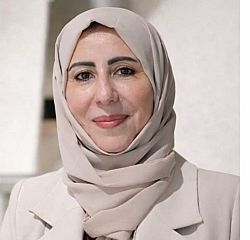
Foreign Minister Dr. Afrah al-Zouba has called for a firm international stance against the Houthi terrorist militias and concrete measures to implement relevant UN Security Council resolutions, particularly Resolution 2216.
Second Day of International Media Forum on Islamic Civilization Kicks Off in Tashkent
The second day of the International Media Forum “Islamic Civilization: A New Perspective – New Discoveries” commenced today, Wednesday, at the Center for Islamic Civilization in the Uzbek capital, Tashkent.

Brent Crude Futures Rise 12 Cents
Oil prices remained mostly unchanged in early Asian trading on Thursday following gains from the previous session and a sharp monthly increase.

Al Nassr Beat Al Fateh 3-0 in Saudi Football League
Al Nassr defeated Al Fateh 3-0 in the opening round of the Saudi Pro League, known as the Roshn Saudi League.
Last Update: ،
2026/10/12
Time
04:29:38
Latest News:
 Yemen Calls for Firm International Action Against Houthis
Coalition Says Cruise Missile Intercepted Near King Khalid International Airport
Yemen Religious Scholars Condemn Houthi Attack on King Khalid International Airport in Riyadh
Rights Group: Houthi Siege of Taiz Worsens Suffering of 2.5 Million People
Council of Ministers Praises Armed Forces Heroic Fighting for Restoring State Institutions
Latest News:
Yemen Calls for Firm International Action Against Houthis
Coalition Says Cruise Missile Intercepted Near King Khalid International Airport
Yemen Religious Scholars Condemn Houthi Attack on King Khalid International Airport in Riyadh
Rights Group: Houthi Siege of Taiz Worsens Suffering of 2.5 Million People
Council of Ministers Praises Armed Forces Heroic Fighting for Restoring State Institutions
President of the Presidential Leadership Council to European Institute of Peace Delegation: Treating the Houthis as a Normal Actor Is a Structural Error That Threatens to Perpetuate War and Suffering
[10/02/2026 09:36]
RIYADH-SABA
His Excellency President Dr. Rashad Mohammed al-Alimi, Chairman of the Presidential Leadership Council, affirmed that the Yemeni people aspire to a sustainable, long-term peace that does not bypass the state or reproduce violence once again.
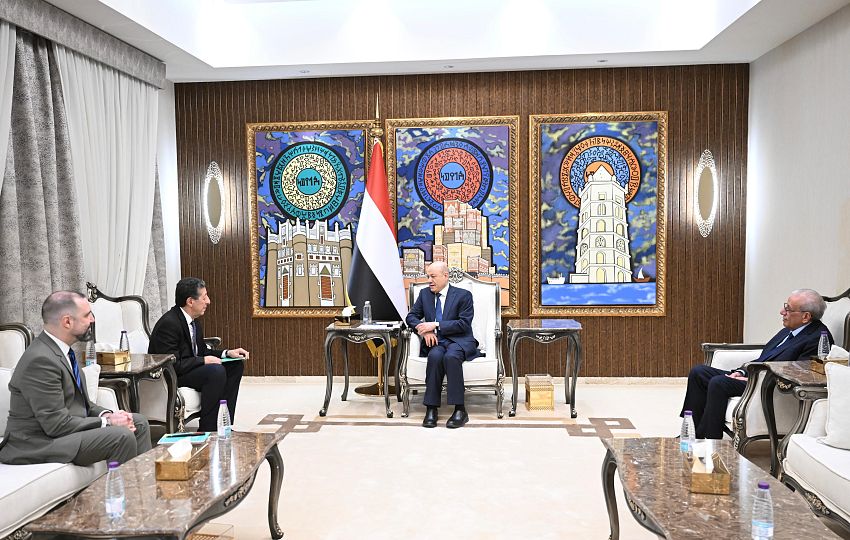
During his reception today, Tuesday, of a delegation from the European Institute of Peace, headed by Ambassador Hesham Youssef, His Excellency stressed that “there can be no sustainable peace without one state, one weapon, and one decision.” He added, “The European experience has taught us that peace that bypasses the state is merely a temporary truce, and that all peace attempts which ignore this reality ultimately end by reproducing war.”
President al-Alimi pointed to Europe’s profound experience in peacebuilding after devastating wars, describing it as a laboratory for understanding how to rebuild states after division and how to deter ideological extremism.
He reiterated that the Houthi terrorist militias are not a party to a conventional conflict, but rather a closed ideological group whose project is based on hereditary discrimination, a claimed divine right to rule, and the denial of equal citizenship.
“Here the European approach becomes a guide,” he said. “Just as Europe dealt with Nazism and fascism as existential threats rather than political opinions, treating the Houthis as a normal actor is a structural error that endangers peace.”
The President added that any peace formula must entail ending ideological weapons, dismantling the logic of lineage-based rule and discrimination, guaranteeing equal citizenship, and establishing a state that protects all its citizens.
He emphasized that any peace lacking enforceable guarantees would reproduce violence, noting that such guarantees must include dismantling the militia’s military and ideological structures, criminalizing sectarianism and racism in the constitution and law, preventing the legitimization of faits accomplis imposed by force, and supporting state institutions economically and in security terms.
President al-Alimi stressed Yemen’s need to move from managing the conflict to addressing its root causes, underscoring that peace is not achieved through a balance between a state and a militia, but through empowering the state and ending the sources and cycles of violence.
He reaffirmed that Yemenis do not reject peace, but rather reject a peace that is stripped of statehood and dignity. “They want a peace like Europe’s—one that lasts forever, not an agreement that collapses after two years,” he said.
The President also reviewed the transformations Yemen has witnessed in the recent period, foremost among them the transition from normalizing division to rebuilding the authority of the state, the formation of a new government, ending dual power structures, unifying security decision-making, and improving services. He described these changes as not merely administrative measures, but essential prerequisites for any genuine peace.
In this context, President al-Alimi commended the efforts of the European Institute of Peace and its role in bringing together Yemeni components, tribal leaders, and stakeholders in important discussions on security, peace, the environment, and other key issues.
His Excellency President Dr. Rashad Mohammed al-Alimi, Chairman of the Presidential Leadership Council, affirmed that the Yemeni people aspire to a sustainable, long-term peace that does not bypass the state or reproduce violence once again.
During his reception today, Tuesday, of a delegation from the European Institute of Peace, headed by Ambassador Hesham Youssef, His Excellency stressed that “there can be no sustainable peace without one state, one weapon, and one decision.” He added, “The European experience has taught us that peace that bypasses the state is merely a temporary truce, and that all peace attempts which ignore this reality ultimately end by reproducing war.”
President al-Alimi pointed to Europe’s profound experience in peacebuilding after devastating wars, describing it as a laboratory for understanding how to rebuild states after division and how to deter ideological extremism.
He reiterated that the Houthi terrorist militias are not a party to a conventional conflict, but rather a closed ideological group whose project is based on hereditary discrimination, a claimed divine right to rule, and the denial of equal citizenship.
“Here the European approach becomes a guide,” he said. “Just as Europe dealt with Nazism and fascism as existential threats rather than political opinions, treating the Houthis as a normal actor is a structural error that endangers peace.”
The President added that any peace formula must entail ending ideological weapons, dismantling the logic of lineage-based rule and discrimination, guaranteeing equal citizenship, and establishing a state that protects all its citizens.
He emphasized that any peace lacking enforceable guarantees would reproduce violence, noting that such guarantees must include dismantling the militia’s military and ideological structures, criminalizing sectarianism and racism in the constitution and law, preventing the legitimization of faits accomplis imposed by force, and supporting state institutions economically and in security terms.
President al-Alimi stressed Yemen’s need to move from managing the conflict to addressing its root causes, underscoring that peace is not achieved through a balance between a state and a militia, but through empowering the state and ending the sources and cycles of violence.
He reaffirmed that Yemenis do not reject peace, but rather reject a peace that is stripped of statehood and dignity. “They want a peace like Europe’s—one that lasts forever, not an agreement that collapses after two years,” he said.
The President also reviewed the transformations Yemen has witnessed in the recent period, foremost among them the transition from normalizing division to rebuilding the authority of the state, the formation of a new government, ending dual power structures, unifying security decision-making, and improving services. He described these changes as not merely administrative measures, but essential prerequisites for any genuine peace.
In this context, President al-Alimi commended the efforts of the European Institute of Peace and its role in bringing together Yemeni components, tribal leaders, and stakeholders in important discussions on security, peace, the environment, and other key issues.
Key words:
Europe’s—one - ” President - transformations - discrimination - administrative - legitimization - peacebuilding - President - prerequisites - understanding -
Presidential Leadership Council Chairman: Yemen Dawn Operation Will Continue Until Its Objectives Are Achieved
President al-Alimi Receives Written Message from Emir of Qatar
President al-Alimi Announces Launch of “Fajr al-Yemen” Operation to Restore State Institutions, Liberate Capital Sana’a
President al-Alimi Declares Military Operations to Restore State Institutions, Take Control Over Entire National Territory
President al-Alimi: Militias Started This War, But Armed Forces Will End It in Way Meets Aspirations of Yemeni People
President al-Alimi Praises Efficiency of Armed Forces, Urges Executing Safe Return, General Mobilization Decisions
President al-Alimi: Armed Forces Capable of Taking Lead in Fighting, Eliminating Houthi Threat
President al-Alimi Receives Reply Message from Emir of Kuwait
President al-Alimi Affirms State’s Ability to Regain Initiative on Western Coast
President al-Alimi: Holding Committers of Grave Human Rights Violations Accountable for Their Crimes, Key Part of Battle to Restore State Institutions