Berlin Protest Calls for Lifting Taiz Siege, Designating Houthis as Terrorists
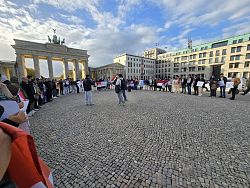
Members of the Yemeni community in Berlin staged a protest calling on Germany, the European Union, the United Nations and the international community to pressure the Iran-backed Houthi militia to lift the siege on Taiz, reopen roads, ensure freedom of movement and allow humanitarian supplies into the city.
GCC Secretary-General Welcomes UN Security Council’s Position on Houthi Attacks Against Saudi Arabia
The Secretary-General of the Gulf Cooperation Council (GCC) Jasem Albudaiwi has expressed his appreciation for the position conveyed by members of the United Nations Security Council in their presidential statement regarding the attacks carried out by the Houthi terrorist militia against the Kingdom of Saudi Arabia.

Brent Crude Futures Rise 12 Cents
Oil prices remained mostly unchanged in early Asian trading on Thursday following gains from the previous session and a sharp monthly increase.

Al Nassr Beat Al Fateh 3-0 in Saudi Football League
Al Nassr defeated Al Fateh 3-0 in the opening round of the Saudi Pro League, known as the Roshn Saudi League.
Last Update: ،
2026/10/26
Time
11:44:21
Latest News:
 Berlin Protest Calls for Lifting Taiz Siege, Designating Houthis as Terrorists
Coalition Carries Out Operation to Neutralize Houthi Threats
Yemen’s Human Rights Ministry Warns of Humanitarian Catastrophe in Taiz
Citizen Killed by Houthi Landmine Explosion in Al-Baydha Governorate
Yemen Condemns Israeli National Security Minister’s Incursion into Al-Aqsa Mosque
Latest News:
Berlin Protest Calls for Lifting Taiz Siege, Designating Houthis as Terrorists
Coalition Carries Out Operation to Neutralize Houthi Threats
Yemen’s Human Rights Ministry Warns of Humanitarian Catastrophe in Taiz
Citizen Killed by Houthi Landmine Explosion in Al-Baydha Governorate
Yemen Condemns Israeli National Security Minister’s Incursion into Al-Aqsa Mosque
Gov. delegation participates in the meetings of WB, IMF in Washington
[20/04/2018 03:47]
WASHINGTON-SABA
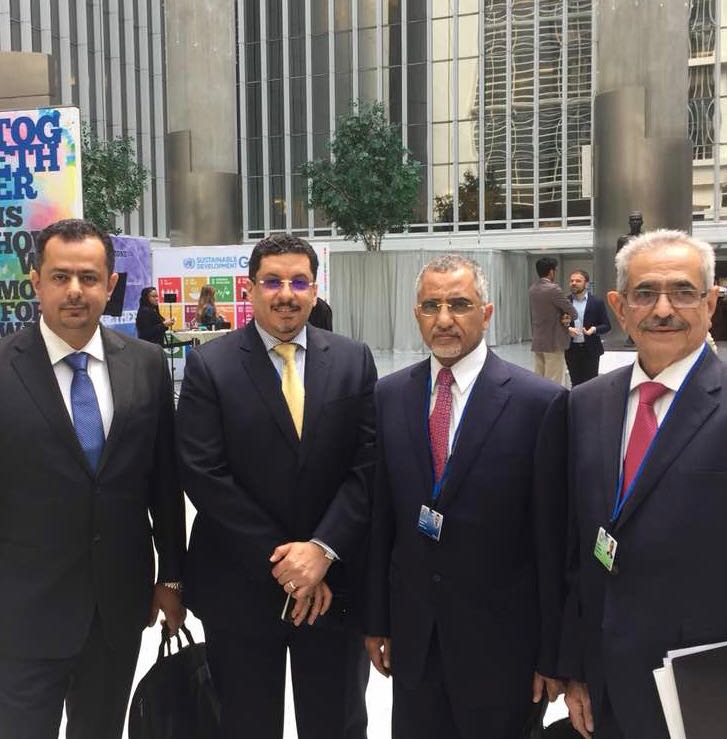
Yemen participated in the meetings of the World Bank (WB) and International Monetary Fund(IMF) which held in Washington.
A high-profile Yemeni delegation attended the meeting included Minister of Finance Ahmed Al-Fadhli, Governor of the Central Bank of Yemen (CYB) Dr Mohammed Zemam, Minister of Public Works Dr Ma'een Abdulmalik, Deputy Minister of Planning and International Cooperation Dr Mohammed Nezar Ba-Sohaib, Deputy governor of the (CBY) of Yemen for International Operations.
The delegation discussed with the Vice President of the WB Hafez Ghanim and experts of the IMF several topics relating to grants and assistances.
Al-Fadhli and Zemam detailed the WB and IMF about the public fiscal status, the deficit in the state general budget and the needed support for the top priority projects in the health sector, social protection and technical assistance.
It is worthy to be noted that total sum of the WB's support for our country amounted to $1.3 billion in the fields of health, nutrition, public works and financial transfers.
The delegation also conducted talks with a number of the US Treasury officials.
Yemen's ambassador to Washington Dr Awadh bin Mubark participated in the discussions.
Yemen participated in the meetings of the World Bank (WB) and International Monetary Fund(IMF) which held in Washington.
A high-profile Yemeni delegation attended the meeting included Minister of Finance Ahmed Al-Fadhli, Governor of the Central Bank of Yemen (CYB) Dr Mohammed Zemam, Minister of Public Works Dr Ma'een Abdulmalik, Deputy Minister of Planning and International Cooperation Dr Mohammed Nezar Ba-Sohaib, Deputy governor of the (CBY) of Yemen for International Operations.
The delegation discussed with the Vice President of the WB Hafez Ghanim and experts of the IMF several topics relating to grants and assistances.
Al-Fadhli and Zemam detailed the WB and IMF about the public fiscal status, the deficit in the state general budget and the needed support for the top priority projects in the health sector, social protection and technical assistance.
It is worthy to be noted that total sum of the WB's support for our country amounted to $1.3 billion in the fields of health, nutrition, public works and financial transfers.
The delegation also conducted talks with a number of the US Treasury officials.
Yemen's ambassador to Washington Dr Awadh bin Mubark participated in the discussions.
Key words:
International - participated - discussions - Yemen's - assistances - SABA Yemen - Cooperation - Washington - ambassador - assistance -
Berlin Protest Calls for Lifting Taiz Siege, Designating Houthis as Terrorists
Yemen’s Human Rights Ministry Warns of Humanitarian Catastrophe in Taiz
Al-Barkani Informs Chairman of Pakistan's National Assembly on Developments in Yemen
Yemen Participates in 17th Session of Arab Ministerial Water Council
Houthi Shelling Kills Child in Southern Taiz
Aden Governor Discusses Humanitarian Cooperation and Sustainable Development Projects with UN OCHA
Houth Cell, Weapon Shipment in Shabwah, Security Achievement
Interior Ministry: Houthis Target Coast Guard Facilities in Aden With Three Ballistic Missiles
Yemenis in Brussels Urge EU to Press for End to Taiz Siege
Yemen’s Prime Minister Condemns Terrorist Attack on Church in Jordan