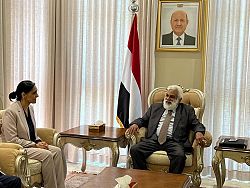
Planning Minister Meets with British Ambassador
Minister of Planning and International Cooperation Mohammed al-Faqmi met with the United Kingdom’s Ambassador to Yemen Abda Sharif.
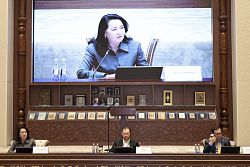
Second Day of International Media Forum on Islamic Civilization Kicks Off in Tashkent
The second day of the International Media Forum “Islamic Civilization: A New Perspective – New Discoveries” commenced today, Wednesday, at the Center for Islamic Civilization in the Uzbek capital, Tashkent.
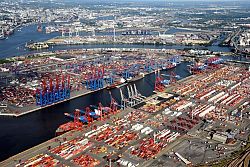
German Exports Rise 3.9 Percent
The total of German exports increased by 3.9 percent during the first half of 2026 compared to the same period last year, reaching 817.8 billion euros.

Al Nassr Beat Al Fateh 3-0 in Saudi Football League
Al Nassr defeated Al Fateh 3-0 in the opening round of the Saudi Pro League, known as the Roshn Saudi League.
Last Update: ،
2026/09/01
Time
11:30:26
Latest News:
 Planning Minister Meets with British Ambassador
Ambassador Balfaqih Discusses Strengthening Bilateral Cooperation with Indonesian Official
Yemen Participates in Non-Aligned Movement Meeting in Belgrade
U.S. House Holds Hearing on Countering Houthi Terrorism and Protecting Red Sea Security
Prime Minister Receives Acting WFP Executive Director in Aden
Latest News:
Planning Minister Meets with British Ambassador
Ambassador Balfaqih Discusses Strengthening Bilateral Cooperation with Indonesian Official
Yemen Participates in Non-Aligned Movement Meeting in Belgrade
U.S. House Holds Hearing on Countering Houthi Terrorism and Protecting Red Sea Security
Prime Minister Receives Acting WFP Executive Director in Aden
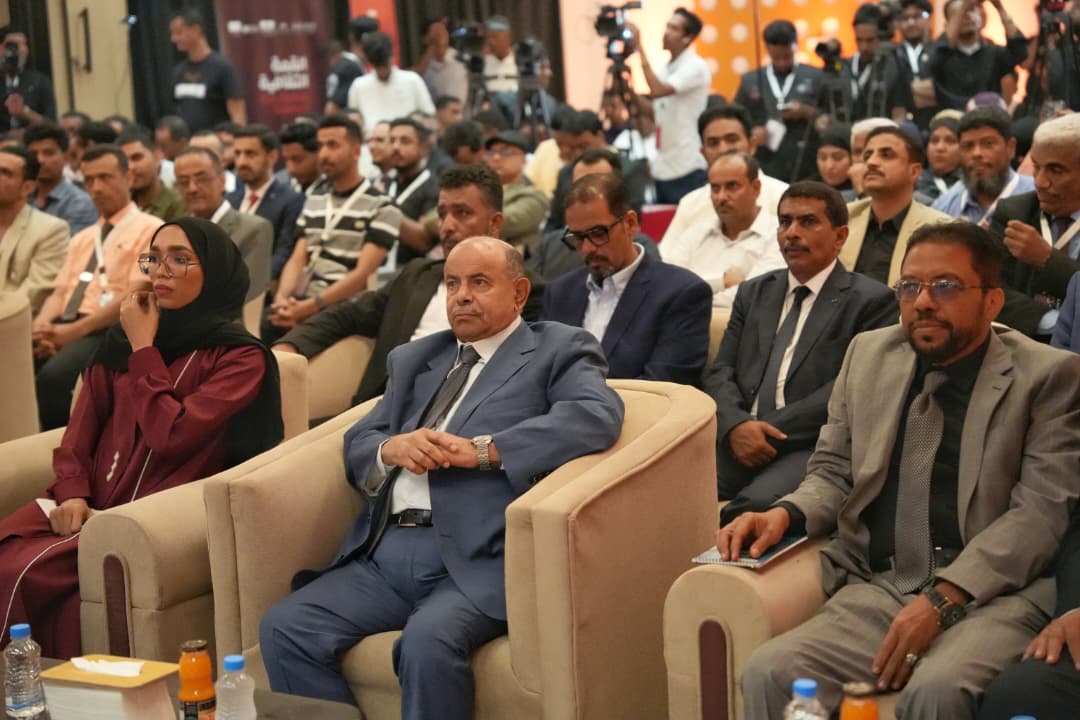
Member of PLC al-Khanbashi Launches Yemeni Cultural Summit in Mukalla
[16/05/2026 12:42]
MUKALLA-SABA
Member of the Presidential Leadership Council Salem al-Khanbashi, the Governor of Hadramout, inaugurated the Yemeni Cultural Summit in Mukalla on Saturday and officially opened the Arts Zone project, implemented by the Hadramout Foundation for Culture with joint funding from the European Union, the British Council, and UNESCO.
The two-day summit brings together cultural stakeholders, policymakers and artists from across Yemen to discuss the future of the country’s cultural sector and its role in promoting peace and social cohesion.
Al-Khanbashi stressed that Hadramout remains a center of culture, heritage, and coexistence, highlighting the importance of strengthening partnerships between local authorities and international organizations to support cultural development.
Deputy Minister of Culture and Tourism Hussein Basalim described the summit as an important platform for empowering youth, encouraging innovation, and supporting sustainable peace through culture.
Representatives of UNESCO, the British Council, and the European Union reaffirmed their commitment to supporting Yemen’s cultural and heritage sectors, emphasizing the role of culture in preserving identity and strengthening community ties.
Key words:
Representatives - SABA Member - organizations - international - strengthening - highlighting - policymakers - Presidential - stakeholders - partnerships -
Foreign Minister Discusses Resuming Kuwaiti Development Funding for Yemen
Planning Minister Meets with British Ambassador
Ambassador Balfaqih Discusses Strengthening Bilateral Cooperation with Indonesian Official
Yemen Participates in Non-Aligned Movement Meeting in Belgrade
U.S. House Holds Hearing on Countering Houthi Terrorism and Protecting Red Sea Security
Prime Minister Receives Acting WFP Executive Director in Aden
Foreign Minister Discusses Expanding Humanitarian Cooperation in Yemen with Kuwaiti Red Crescent
Othman Mujalli Meets with Chargé d' Affaires of US Embassy
Joint Security Operation Eliminates ISIS Spokesperson in Seiyon
Minister of Planning Meets with German Ambassador