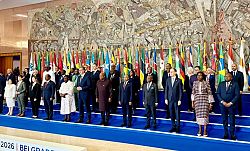
Yemen Participates in Non-Aligned Movement Meeting in Belgrade
The Republic of Yemen participated Tuesday in a high-level meeting marking the 65th anniversary of the first Conference of Heads of State and Government of the Non-Aligned Movement, held in the Serbian capital, Belgrade.

Second Day of International Media Forum on Islamic Civilization Kicks Off in Tashkent
The second day of the International Media Forum “Islamic Civilization: A New Perspective – New Discoveries” commenced today, Wednesday, at the Center for Islamic Civilization in the Uzbek capital, Tashkent.
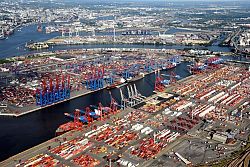
German Exports Rise 3.9 Percent
The total of German exports increased by 3.9 percent during the first half of 2026 compared to the same period last year, reaching 817.8 billion euros.

Al Nassr Beat Al Fateh 3-0 in Saudi Football League
Al Nassr defeated Al Fateh 3-0 in the opening round of the Saudi Pro League, known as the Roshn Saudi League.
Last Update: ،
2026/09/01
Time
05:55:47
Latest News:
 U.S. House Holds Hearing on Countering Houthi Terrorism and Protecting Red Sea Security
Prime Minister Receives Acting WFP Executive Director in Aden
Foreign Minister Discusses Expanding Humanitarian Cooperation in Yemen with Kuwaiti Red Crescent
Othman Mujalli Meets with Chargé d' Affaires of US Embassy
Joint Security Operation Eliminates ISIS Spokesperson in Seiyon
Latest News:
U.S. House Holds Hearing on Countering Houthi Terrorism and Protecting Red Sea Security
Prime Minister Receives Acting WFP Executive Director in Aden
Foreign Minister Discusses Expanding Humanitarian Cooperation in Yemen with Kuwaiti Red Crescent
Othman Mujalli Meets with Chargé d' Affaires of US Embassy
Joint Security Operation Eliminates ISIS Spokesperson in Seiyon
U.S. House Holds Hearing on Countering Houthi Terrorism and Protecting Red Sea Security
[01/09/2026 05:11]
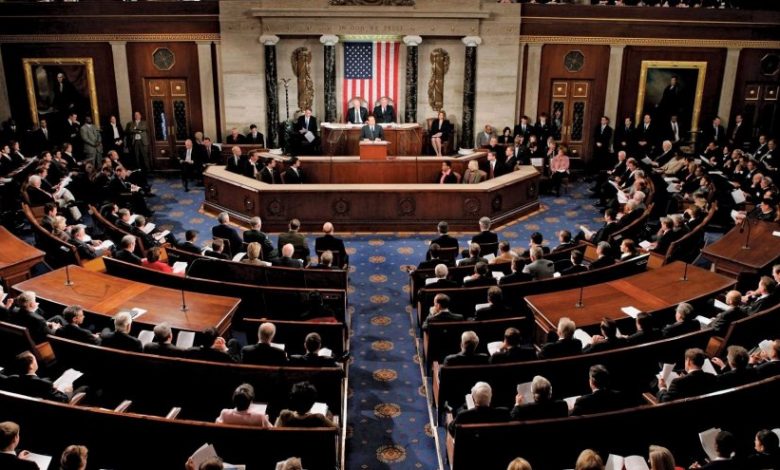
WASHINGTON-SABA
The U.S. House of Representatives held a hearing on Tuesday titled “Countering Houthi Terrorism: Protecting American Interests and Red Sea Security,” focusing on the growing threat posed by the Iran-backed Houthi militia to international shipping, regional stability and U.S. interests.
Subcommittee Chairman Rep. Mike Lawler said the Houthis were a foreign terrorist organisation armed with ballistic and cruise missiles and attack drones, noting that the group had targeted U.S. forces, attacked American partners and threatened commercial shipping in one of the world's most important waterways.
Lawler said Iran had played a central role in developing the Houthis' military capabilities by providing weapons, funding, training and technical expertise, transforming a local armed movement into a terrorist organisation capable of threatening Americans and disrupting international trade.
He stressed that military deterrence alone would not be sufficient, arguing that efforts must also target the financial, procurement, smuggling and logistical networks enabling the Houthis to replenish destroyed military capabilities.
Rep. Jared Moskowitz highlighted continued Houthi attacks against commercial shipping and Saudi Arabia, warning that the group's activities had increased risks to maritime navigation and global energy flows while threatening to draw Yemen deeper into wider regional conflict.
He also called for stronger international efforts to curb the smuggling of dual-use materials and technology used to enhance Houthi missile and drone capabilities.
Yemeni-American researcher Nadwa al-Dawsari told the hearing that the continued development of the Houthi threat was driven by sustained Iranian support and the international community's underestimation of the group.
She stressed the need for a long-term strategy that strengthens the Yemeni government, noting that Houthi territorial control provides the group with recruits, revenues, ports, smuggling routes and areas for manufacturing and storing weapons.
Meanwhile, Allison Miner, Director of the Middle East Integration Project at the Atlantic Council, warned that an open-ended war could ultimately benefit the Houthis. She called for resuming humanitarian assistance, strengthening Yemeni government institutions and supporting the Yemeni Coast Guard.
She said a sustainable U.S. strategy should rely on continued cooperation with Yemeni and regional partners rather than oscillating between costly military intervention and disengagement.
Key words:
Subcommittee - Representatives - underestimation - disengagement - international - strengthening - Meanwhile - manufacturing - “Countering - intervention -
U.S. House Holds Hearing on Countering Houthi Terrorism and Protecting Red Sea Security
Prime Minister Receives Acting WFP Executive Director in Aden
Foreign Minister Discusses Expanding Humanitarian Cooperation in Yemen with Kuwaiti Red Crescent
Masam Clears 819 Houthi-Laid Mines and Explosive Devices in a Week
Al-Muharrami Meets Planning Minister, Stresses International Partnerships and Reform Support
Yemen Participates in Opening of 63rd Damascus International Fair
King Salman Humanitarian Aid Centre Launches Distribution of More Than 3,640 Food Baskets in Taiz
Al-Arada Highlights Yemen's Need For An Effective International Partnership To Manage Security, Economic Challenges
Council Of Ministers Approves Significant National Strategies, International Agreements
Foreign Minister: Restoring State Is Key to Yemen, Gulf and Red Sea Security