Presidential Leadership Council Member Bawazir Praises UN Secretary-General Support for Yemen
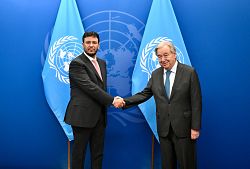
The Member of the Presidential Leadership Council (PLC) Dr. Abdullah Bawazir greatly praised the significant efforts of the UN Secretary-General António Guterres and his active role in mobilizing the international efforts to ease the suffering of the Yemeni people, to end the war and make peace.
Second Day of International Media Forum on Islamic Civilization Kicks Off in Tashkent
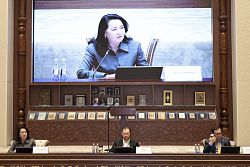
The second day of the International Media Forum “Islamic Civilization: A New Perspective – New Discoveries” commenced today, Wednesday, at the Center for Islamic Civilization in the Uzbek capital, Tashkent.

Gold Rises Over 1 Percent
Gold prices rose more than one percent today, Thursday, as investors digested the U.S. interest rate hike and hints of further monetary tightening, while the rally in oil prices came to a halt.

Al Nassr Beat Al Fateh 3-0 in Saudi Football League
Al Nassr defeated Al Fateh 3-0 in the opening round of the Saudi Pro League, known as the Roshn Saudi League.
Last Update: ،
2026/09/27
Time
12:39:53
Latest News:
 Foreign Minister Briefs Secretary-General of OIC on Developments in Yemen
Leadership Council Member Discusses Bilateral Relations, Developments in Yemen with Russian Foreign Minister
Baaker Discusses Arrangements for Signing a Memorandum of Understanding Between the Two Diplomatic Institutes ..
Al-Alimi Discusses Humanitarian Crisis with UN Official
Yemen Calls for International Action to Protect Jerusalem
Latest News:
Foreign Minister Briefs Secretary-General of OIC on Developments in Yemen
Leadership Council Member Discusses Bilateral Relations, Developments in Yemen with Russian Foreign Minister
Baaker Discusses Arrangements for Signing a Memorandum of Understanding Between the Two Diplomatic Institutes ..
Al-Alimi Discusses Humanitarian Crisis with UN Official
Yemen Calls for International Action to Protect Jerusalem
HR Minister says UNHRC division will undermine effectiveness of its future resolutions
[29/09/2018 02:21]
GENEVA-SABA
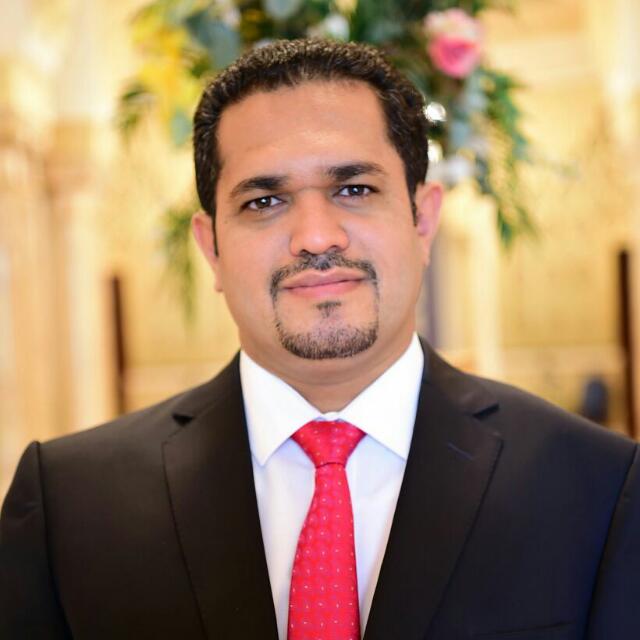
Minister of Human Rights Mohammed Askar said the division in the UN Human Rights Council will undermine the effective of its future resolutions.
Askar made the remarks in a statement to Saba on Friday as he referred to the Dutch resolution that extended the mission of the UN Panel of Experts on Yemen, which was voted for by less than half of the UNHRC members.
"Everyone noticed the division that appeared clear today during the UNHRC's approval of the resolution presented by a number of western countries and passed by less than half of the council's members," he said.
He said the countries that voted for the division of the UNHRC are to blame for this division of the UNHRC.
He also expressed surprise over those countries' ignorance of Yemen's keenness for arriving at a unanimous UNHRC resolution that reflects the international coherence over Yemen's situation.
"We, and the Arab Group (in the UNHRC), have been committed to a draft resolution we tabled under the UNHRC's Agenda Item 10 which calls on the OHCHR to continue providing technical assistance and capacity building for the government particularly the National Commission for Enquiry. That draft had been unanimously approved by the UNHRC's members," he said.
"When the Panel of Experts issued their report, the human rights ministry set up a special team to prepare a reply of 18 pages," he continued, "the government's reply proved that the report was biased … and that it deliberately turned a blind eye to the serious and major atrocities of the Houthi militia."
He said that the government's delegation, throughout the period of its participation in the 39th session of the UNHRC, has been conveying the facts of the report's bias to the international community.
He said that the government has taken its decision to refuse the extension of the Experts' mission.
Minister of Human Rights Mohammed Askar said the division in the UN Human Rights Council will undermine the effective of its future resolutions.
Askar made the remarks in a statement to Saba on Friday as he referred to the Dutch resolution that extended the mission of the UN Panel of Experts on Yemen, which was voted for by less than half of the UNHRC members.
"Everyone noticed the division that appeared clear today during the UNHRC's approval of the resolution presented by a number of western countries and passed by less than half of the council's members," he said.
He said the countries that voted for the division of the UNHRC are to blame for this division of the UNHRC.
He also expressed surprise over those countries' ignorance of Yemen's keenness for arriving at a unanimous UNHRC resolution that reflects the international coherence over Yemen's situation.
"We, and the Arab Group (in the UNHRC), have been committed to a draft resolution we tabled under the UNHRC's Agenda Item 10 which calls on the OHCHR to continue providing technical assistance and capacity building for the government particularly the National Commission for Enquiry. That draft had been unanimously approved by the UNHRC's members," he said.
"When the Panel of Experts issued their report, the human rights ministry set up a special team to prepare a reply of 18 pages," he continued, "the government's reply proved that the report was biased … and that it deliberately turned a blind eye to the serious and major atrocities of the Houthi militia."
He said that the government's delegation, throughout the period of its participation in the 39th session of the UNHRC, has been conveying the facts of the report's bias to the international community.
He said that the government has taken its decision to refuse the extension of the Experts' mission.
Key words:
SABA Minister - "Everyone - participation - international - government's - deliberately - particularly - resolutions - unanimously - countries' -
Al-Alimi Discusses Humanitarian Crisis with UN Official
Yemen Calls for International Action to Protect Jerusalem
Foreign Minister Discusses Humanitarian Situation, Houthi Escalation With ICRC
Coalition Says It Intercepted Two Ballistic Missiles, Two Drones Launched Toward Saudi Arabia
Foreign Minister Stresses Investment in Children, Protection of Health and Nutrition Services
Al-Alimi, Arab League Chief Discuss Yemen and Arab National Security
Foreign Minister Praises Germany’s Stance Against Houthi Attacks, its Contribution to Protecting Freedom of Navigation
Local Authority in Marib Signs Memorandum of Understanding with British Organization to Fund, Implement Water Sector Project
Al-Alimi Discusses Yemen Developments, Red Sea Security with EU Official
President al-Alimi: Armed Forces Capable of Taking Lead in Fighting, Eliminating Houthi Threat