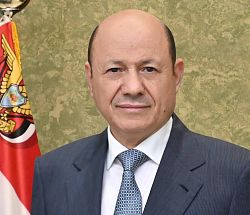
President al-Alimi Calls for International Efforts to Designate Houthi Militia as Terrorist Organization
Chairman of the Presidential Leadership Council Dr. Rashad Mohammed al-Alimi has formally called on UN Secretary-General António Guterres to support international efforts through the Security Council to designate the Houthi militia as a terrorist organization, enforce the arms embargo, cut off its funding and weapons supplies, and hold its supporters accountable.
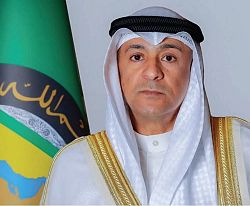
GCC Secretary-General Welcomes UN Security Council’s Position on Houthi Attacks Against Saudi Arabia
The Secretary-General of the Gulf Cooperation Council (GCC) Jasem Albudaiwi has expressed his appreciation for the position conveyed by members of the United Nations Security Council in their presidential statement regarding the attacks carried out by the Houthi terrorist militia against the Kingdom of Saudi Arabia.

Brent Crude Futures Rise 12 Cents
Oil prices remained mostly unchanged in early Asian trading on Thursday following gains from the previous session and a sharp monthly increase.

Al Nassr Beat Al Fateh 3-0 in Saudi Football League
Al Nassr defeated Al Fateh 3-0 in the opening round of the Saudi Pro League, known as the Roshn Saudi League.
Last Update: ،
2026/10/20
Time
12:47:58
Latest News:
 President al-Alimi Calls for International Efforts to Designate Houthi Militia as Terrorist Organization
GCC's Ministerial Council Confirms its Support for Yemen's Unity, Sovereignty, Calls for Designating ..
Yemeni Ambassador Discusses Escalating Houthi Threats with US Assistant Secretary of State
Zouba, Indonesian Deputy Foreign Minister Discuss Cultural and Educational Cooperation
Government Calls on Security Council to Condemn Houthi Escalation in Yemen
Latest News:
President al-Alimi Calls for International Efforts to Designate Houthi Militia as Terrorist Organization
GCC's Ministerial Council Confirms its Support for Yemen's Unity, Sovereignty, Calls for Designating ..
Yemeni Ambassador Discusses Escalating Houthi Threats with US Assistant Secretary of State
Zouba, Indonesian Deputy Foreign Minister Discuss Cultural and Educational Cooperation
Government Calls on Security Council to Condemn Houthi Escalation in Yemen
Health Ministry taking measures to counter a second wave of watery diarrhea
[05/06/2017 10:09]

ADEN-SABA
The Ministry of Public Health and Population has been taking measures to counter a second wave of severe watery diarrthea that started to emerge on April 27 as one cholera infection case was reported, Yemen's Deputy Minister for Health and Population Ali Al-Waleedi said.
"One central operations room was set up in the temporary capital, Aden, and another in Sana'a, and one such room in each province where infection cases were reported."
The Ministry opened patient reception centers in 19 provinces. In cooperation with the WHO and the likeminded organizations, the ministry supplied these centers with medicines, medical and hygiene tools such as chlorine and health awareness promotional leaflets, said Al-W aleedi.
A large number of the infections are reported in the areas under the control of the Houthi-Saleh militia, namely Ibb, Hajjah, Amran, Sana'a and Mahweet, he said.
The Deputy Minister thanked stakeholders in fighting this epidemic. He especially hailed King Salman's Center for Relief and Humanitarian Aid, the UAE Red Crescent Corporation, the Kuwaiti Relief Committee, the Arab coalition member countries and all the international organizations involved.
Key words:
international - organizations - stakeholders - Humanitarian - promotional - Corporation - cooperation - Population - especially - operations -
Human Rights Minister Discusses Houthi Violations with German Foreign Ministry Official
President al-Alimi Calls for International Efforts to Designate Houthi Militia as Terrorist Organization
Yemeni Ambassador Discusses Escalating Houthi Threats with US Assistant Secretary of State
Zouba, Indonesian Deputy Foreign Minister Discuss Cultural and Educational Cooperation
Al-Khanbashi Praises UNDP Interventions in Hadramout
Iraqi Prime Minister Receives Foreign Minister
Yemen Welcomes European Council's Statement on Houthi Terrorist Militias' Escalation
Foreign Minister: Tehran Regime Party to War on Yemenis, Not Mediator
Foreign Minister Holds Talks with Indonesian Counterpart on Yemen, Regional Developments
President al-Alimi Discusses National and Regional Developments with UK Foreign Secretary