Taiz Governor: Food Stocks Cover Only 10% of Residents’ Needs as Supplies Plummet
Taiz Governor Nabil Shamsan has warned that food stocks in the city are sufficient to meet only 10 percent of residents’ needs, while supplies of food, medicine and water have fallen by 90 percent, gas by 97.3 percent, petrol by 96.3 percent and diesel by 97.2 percent due to the ongoing siege and restrictions on the movement of supplies.
GCC Secretary-General Welcomes UN Security Council’s Position on Houthi Attacks Against Saudi Arabia
The Secretary-General of the Gulf Cooperation Council (GCC) Jasem Albudaiwi has expressed his appreciation for the position conveyed by members of the United Nations Security Council in their presidential statement regarding the attacks carried out by the Houthi terrorist militia against the Kingdom of Saudi Arabia.

EU Allocates 525 Million Euros to Support Startups in Chip Design
European Commissioner for Technological Sovereignty, Security and Democracy, Hana Verkonen, announced that the European Union (EU) has allocated 525 million euros to support startups in the field of chip design.

Al Nassr Beat Al Fateh 3-0 in Saudi Football League
Al Nassr defeated Al Fateh 3-0 in the opening round of the Saudi Pro League, known as the Roshn Saudi League.
Last Update: ،
2026/11/17
Time
12:40:57
Latest News:
 Foreign Minister Highlights Impact of Houthi Escalation on Yemen and the Region in Hague
Charge d,Affairs in Damascus Discusses Strengthening Parliamentary Cooperation with Syrian Official
Parliament Approves Law of Designating Houthi Group Terrorist Organization, Criminalizing its Activities, ..
Foreign Minister Seeks Dutch Organizations' Cooperation To Boost Humanitarian, Development Efforts
Coalition Intercepts and Destroys Two Houthi Drones Over Makkah and Riyadh
Latest News:
Foreign Minister Highlights Impact of Houthi Escalation on Yemen and the Region in Hague
Charge d,Affairs in Damascus Discusses Strengthening Parliamentary Cooperation with Syrian Official
Parliament Approves Law of Designating Houthi Group Terrorist Organization, Criminalizing its Activities, ..
Foreign Minister Seeks Dutch Organizations' Cooperation To Boost Humanitarian, Development Efforts
Coalition Intercepts and Destroys Two Houthi Drones Over Makkah and Riyadh
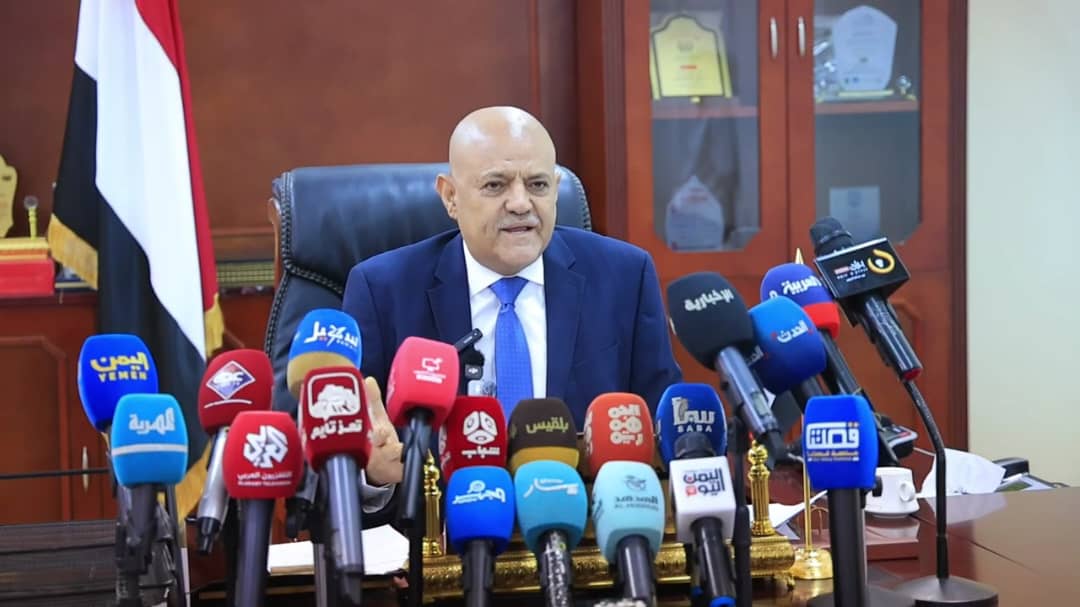
Taiz Governor: Food Stocks Cover Only 10% of Residents’ Needs as Supplies Plummet
[17/11/2026 12:29]
TAIZ-SABA
Taiz Governor Nabil Shamsan has warned that food stocks in the city are sufficient to meet only 10 percent of residents’ needs, while supplies of food, medicine and water have fallen by 90 percent, gas by 97.3 percent, petrol by 96.3 percent and diesel by 97.2 percent due to the ongoing siege and restrictions on the movement of supplies.
Speaking at a press conference in Taiz on Tuesday, Shamsan said food prices had risen by approximately 60 percent, while gas and fuel prices had surged by around 300 percent. Transportation costs had also quadrupled, further worsening living conditions.
He reported that the number of medical consultations had dropped from 123,105 to 90,328 over the past five weeks, while medicines for chronic diseases, particularly insulin and albumin, had run out. The shortages threaten approximately 8,000 diabetes patients and 14,000 people with other chronic illnesses.
The crisis has also affected 462,899 children under the age of five and disrupted access to reproductive health services for 491,583 women of childbearing age. Only 26 percent of these women have received such services, while 40,656 pregnant women are facing difficulties accessing safe childbirth services.
Shamsan warned that 79,268 infants under the age of one are at risk of missing vaccinations due to depleted vaccine stocks. The number of neonatal incubators has fallen from 160 to 78, while the number of beneficiaries of newborn care services has dropped from 592 to 288.
He added that moderate and severe stunting rates among children under five had reached 43 percent, including 17 percent suffering from severe stunting. The governor also reported 70,977 cases of acute diarrhea and 5,847 cases of lower respiratory tract infections amid deteriorating sanitation services and the burning of garbage in residential neighborhoods.
Shamsan warned that the continued deterioration of essential services and limited access to healthcare, food and water could have long-term humanitarian and health consequences, extending beyond the current crisis and increasing the cost of future interventions.
He urged the United Nations, international organizations and donors to translate humanitarian warnings into urgent practical action, secure the road linking Taiz city with Lahj and Aden governorates, and lift restrictions on the movement of civilians and essential supplies.
He also called for safe and regular access to food, medicine, water, fuel and humanitarian assistance, support for the continued operation of hospitals, bakeries, water and sanitation facilities, and easier referrals for patients and emergency cases. He further urged the expansion of food and cash assistance programs, treatment of malnutrition, stronger protection for civilians and children, documentation of violations, and provision of psychosocial support services.
On the military front, Shamsan expressed confidence in the political leadership's decisions regarding redeployment and restructuring the theater of operations, saying the measures aim to reorganize front lines, strengthen their cohesion and create conditions for lifting the siege on Taiz, while protecting the interim capital, Aden, and neighboring governorates.
He praised the resilience of Taiz residents, public service workers, medical personnel, relief teams and volunteers, stressing that protecting people's lives, dignity and rights is a national and humanitarian responsibility. He renewed his call for reopening supply routes and ensuring that residents can access food, water, healthcare and security.
Key words:
Transportation - responsibility - deteriorating - documentation - interventions - restructuring - international - approximately - organizations - deterioration -
Taiz Governor: Food Stocks Cover Only 10% of Residents’ Needs as Supplies Plummet
Parliament Approves Law of Designating Houthi Group Terrorist Organization, Criminalizing its Activities, Funding
Coalition Intercepts and Destroys Two Houthi Drones Over Makkah and Riyadh
Rights Group Documents 319 Civilian Casualties in Houthi Violations in Taiz
Houthi Militias Detain and Kidnap 525 Civilians in Taiz in One Day
Masam Project Removes 2,330 Landmines and Unexploded Ordnance in Yemen
Parliament Reviews Bill to Designate Houthis as Terrorist Organization
Woman Killed, Eight Civilians Wounded in Houthi Sniper Attacks and Shelling in Taiz
Vice Foreign Minister Discusses Conditions of Yemeni Refugees in Djibouti
Prime Minister Forms High-Level Committee to Oversee IMF-Supported Reform Programme