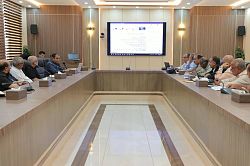
Yemen, FAO Review Food Security and Resilience Project Progress
The Ministry of Agriculture, Irrigation and Fisheries and the UN Food and Agriculture Organization (FAO) reviewed progress on the World Bank-funded Food Security Response and Resilience Project in Yemen (FSRRP), which has achieved approximately 70% completion.

GCC Secretary-General Welcomes UN Security Council’s Position on Houthi Attacks Against Saudi Arabia
The Secretary-General of the Gulf Cooperation Council (GCC) Jasem Albudaiwi has expressed his appreciation for the position conveyed by members of the United Nations Security Council in their presidential statement regarding the attacks carried out by the Houthi terrorist militia against the Kingdom of Saudi Arabia.

Brent Crude Futures Rise 12 Cents
Oil prices remained mostly unchanged in early Asian trading on Thursday following gains from the previous session and a sharp monthly increase.

Al Nassr Beat Al Fateh 3-0 in Saudi Football League
Al Nassr defeated Al Fateh 3-0 in the opening round of the Saudi Pro League, known as the Roshn Saudi League.
Last Update: ،
2026/10/28
Time
05:56:51
Latest News:
 Yemen, FAO Review Food Security and Resilience Project Progress
Government Reaffirms Commitment to Ending Taiz Siege, Calls for Expanded Houthi Terrorist Designation
Transport Ministry: Repeated Attacks on Aden International Airport Threaten Lives
Houthi Militias Blamed for 75 Crimes, Violations in 48 Hours in Taiz
Yemen Calls for Fair Funding to Protect Biodiversity in Least Developed and Conflict-Affected Countries
Latest News:
Yemen, FAO Review Food Security and Resilience Project Progress
Government Reaffirms Commitment to Ending Taiz Siege, Calls for Expanded Houthi Terrorist Designation
Transport Ministry: Repeated Attacks on Aden International Airport Threaten Lives
Houthi Militias Blamed for 75 Crimes, Violations in 48 Hours in Taiz
Yemen Calls for Fair Funding to Protect Biodiversity in Least Developed and Conflict-Affected Countries
FM participates in meeting on Partnership between India and the United Nations
[24/09/2022 05:45]

New York – Saba
Minister of Foreign Affairs and Expatriates, Dr. Ahmed Awad bin Mubarak, participated today in the side event of the India-United Nations Partnership, which was convened by the Indian Minister of External Affairs, Subramnyam Shankar, on the occasion of the 75th anniversary of India's independence.
In his speech at the meeting, Bin Mubarak spoke about the causes of food insecurity in Yemen, which are related to several factors, foremost of which is the war waged by the Houthi militia against the Yemeni people, the deterioration of the national currency, the recent geopolitical wars, the corona pandemic, and the decline in foreign transfers.
He pointed out that there are many basic factors that have exacerbated the humanitarian crisis in Houthi militia-controlled areas in particular, including the Houthi restrictions imposed on humanitarian access, which deprive the most vulnerable groups of receiving life-saving assistance, especially since the Houthis have a terrible record in preventing relief agencies from reaching civilians in need, and the practice of diverting an important part of the aid to Houthi officials, their supporters, and their fighters.
Key words:
deterioration - humanitarian - restrictions - participated - independence - geopolitical - exacerbated - Partnership - anniversary - Expatriates -
Human Access: Thousands of Displaced Yemeni Families Struggle to Rebuild Their Lives
Yemen, FAO Review Food Security and Resilience Project Progress
Government Reaffirms Commitment to Ending Taiz Siege, Calls for Expanded Houthi Terrorist Designation
Transport Ministry: Repeated Attacks on Aden International Airport Threaten Lives
Houthi Militias Blamed for 75 Crimes, Violations in 48 Hours in Taiz
Yemen Calls for Fair Funding to Protect Biodiversity in Least Developed and Conflict-Affected Countries
President al-Alimi Launches Package of Relief Projects from King Salman Center to Support Taiz's Resilience, Help those Affected Across Yemen
Yemeni Ambassador Discusses Developments in Yemen with Czech Parliament Speaker
Aden Governor Discusses with UNICEF Strengthening Interventions in Water, Education
Green Climate Fund Approves Project Worth $28 Million to Develop 'CWIMEWS' in Yemen