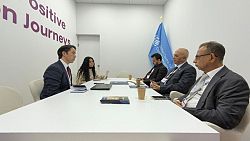
Water Minister Discusses Research Cooperation to Address Climate-Related Displacement in Yemen
Minister of Water and Environment Tawfiq al-Sharjabi met with Dr. Andrea Milan of the Global Centre for Climate Mobility.
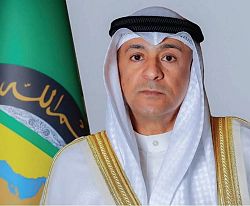
GCC Secretary-General Welcomes UN Security Council’s Position on Houthi Attacks Against Saudi Arabia
The Secretary-General of the Gulf Cooperation Council (GCC) Jasem Albudaiwi has expressed his appreciation for the position conveyed by members of the United Nations Security Council in their presidential statement regarding the attacks carried out by the Houthi terrorist militia against the Kingdom of Saudi Arabia.

EU Allocates 525 Million Euros to Support Startups in Chip Design
European Commissioner for Technological Sovereignty, Security and Democracy, Hana Verkonen, announced that the European Union (EU) has allocated 525 million euros to support startups in the field of chip design.

Al Nassr Beat Al Fateh 3-0 in Saudi Football League
Al Nassr defeated Al Fateh 3-0 in the opening round of the Saudi Pro League, known as the Roshn Saudi League.
Last Update: ،
2026/11/17
Time
09:48:35
Latest News:
 Technical Education Minister Meets Chinese Embassy Chargé d’Affaires
Dutch Prime Minister Receives Letter from president al-Alimi
Vice Foreign Minister Meets UNVIM Director in Djibouti
Human Rights Ministry Documents 3,334 Houthi Violations in 107 Days
Yemen Condemns Renewed Iranian Attacks on Bahrain
Latest News:
Technical Education Minister Meets Chinese Embassy Chargé d’Affaires
Dutch Prime Minister Receives Letter from president al-Alimi
Vice Foreign Minister Meets UNVIM Director in Djibouti
Human Rights Ministry Documents 3,334 Houthi Violations in 107 Days
Yemen Condemns Renewed Iranian Attacks on Bahrain
Bin Mubarak discusses with Irish FM latest developments in Yemen
[22/09/2021 06:20]

NEW YORK-SABA
Minister of Foreign Affairs and Expatriates Ahmad Awadh bin Mubarak discussed Wednesday with Irish Foreign Minister, the Minister of Defense Simon Coveney, on the sidelines of his participation in the UN General Assembly's meetings, latest developments in Yemen.
Bin Mubarak reviewed different developments in Yemen, especially Houthi militia's military escalation in Marib and targeting populated areas, pointing out to Iranian negative role in destabilizing Yemen and the region.
He talked about political process, confirming support of the government of Yemen to new UN envoy to Yemen for searching for a political solution realizing just and inclusive peace in accordance with the three agreed upon references.
He also stressed significance of Security Council's role to end the threat posed by Safir Oil Tanker on the environment of Yemen and the region and on international maritime navigation because of Houthi militia stubbornness and rejection to all solutions suggested by the UN for evaluating, doing maintenance work and draining the tanker from one billion barrel of crude oil.
For his part, the Irish minister confirmed his country's support to the government of Yemen and to peace efforts led by the new envoy to Yemen and also confirmed that his country will work with international partners on keeping Yemen's issue on their priorities, especially in the Security Council.
Key words:
SABA Minister - participation - destabilizing - international - significance - stubbornness - developments - environment - Expatriates - maintenance -
Water Minister Discusses Research Cooperation to Address Climate-Related Displacement in Yemen
Technical Education Minister Meets Chinese Embassy Chargé d’Affaires
Dutch Prime Minister Receives Letter from president al-Alimi
Vice Foreign Minister Meets UNVIM Director in Djibouti
Human Rights Ministry Documents 3,334 Houthi Violations in 107 Days
Yemen Condemns Renewed Iranian Attacks on Bahrain
Governor of Lahj Discusses MSF's Medical Interventions
Parliament Speaker Submits Houthi Terrorist Designation Law to President
Minister of Water and Environment Reviews Yemen’s Climate Action
Taiz Governor: Food Stocks Cover Only 10% of Residents’ Needs as Supplies Plummet