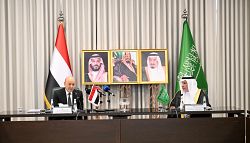
President al-Alimi Launches Package of Relief Projects from King Salman Center to Support Taiz's Resilience, Help those Affected Across Yemen
His Excellency President Dr. Rashad al-Alimi, Chairman of the Presidential Leadership Council (PLC), visited today, Tuesday the King Salman Center for Relief and Humanitarian Work. He was received by Dr. Abdullah al-Rabeeah, Advisor at the Royal Court and General Supervisor of the Center, Saudi Arabia's Ambassador to Yemen, Mohammed al-Jaber, along with several leaders of the center and its partners in relief and humanitarian work.
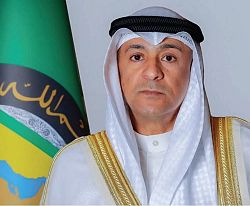
GCC Secretary-General Welcomes UN Security Council’s Position on Houthi Attacks Against Saudi Arabia
The Secretary-General of the Gulf Cooperation Council (GCC) Jasem Albudaiwi has expressed his appreciation for the position conveyed by members of the United Nations Security Council in their presidential statement regarding the attacks carried out by the Houthi terrorist militia against the Kingdom of Saudi Arabia.

Brent Crude Futures Rise 12 Cents
Oil prices remained mostly unchanged in early Asian trading on Thursday following gains from the previous session and a sharp monthly increase.

Al Nassr Beat Al Fateh 3-0 in Saudi Football League
Al Nassr defeated Al Fateh 3-0 in the opening round of the Saudi Pro League, known as the Roshn Saudi League.
Last Update: ،
2026/10/28
Time
03:37:29
Latest News:
 Yemeni Ambassador Discusses Developments in Yemen with Czech Parliament Speaker
Aden Governor Discusses with UNICEF Strengthening Interventions in Water, Education
Green Climate Fund Approves Project Worth $28 Million to Develop 'CWIMEWS' in Yemen
Yemen, China Discuss Development and Humanitarian Cooperation
President al-Alimi Calls on Europe to Designate Houthis as Terrorist Organization
Latest News:
Yemeni Ambassador Discusses Developments in Yemen with Czech Parliament Speaker
Aden Governor Discusses with UNICEF Strengthening Interventions in Water, Education
Green Climate Fund Approves Project Worth $28 Million to Develop 'CWIMEWS' in Yemen
Yemen, China Discuss Development and Humanitarian Cooperation
President al-Alimi Calls on Europe to Designate Houthis as Terrorist Organization
Shura Chairman meets EU diplomat
[13/07/2021 01:46]
RIYADH-SABA
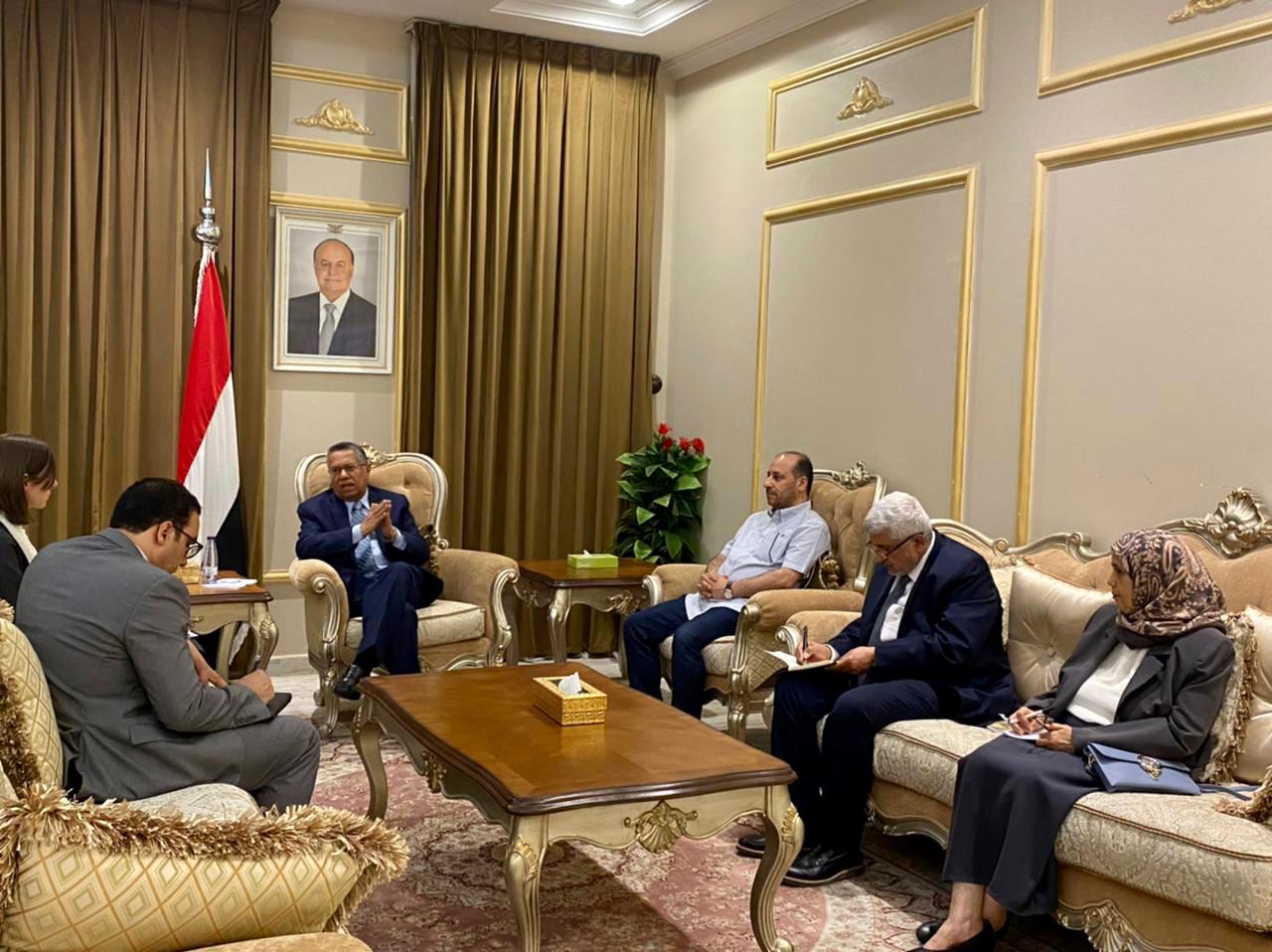
The Speaker of the Shura Council, Dr. Ahmed Obaid bin Daghr, met today with the Deputy Ambassador and Chargé d'Affairs of the European Union and reviewed with her ways to strengthen and develop bilateral relations between Yemen and the European Union.
Dr. Bin Dagher touched on the latest developments on the Yemeni arena, the repercussions of the Houthi coup, and the damage the Houthi coup and war have inflicted on Yemen at all levels.
He reiterated the government's welcoming attitude toward all peace initiatives, including the latest initiative by the Kingdom of Saudi Arabia, and the efforts of friends in Europe and the international community to stop the war and achieve Peace, which Houthis refuse now in a reflection of their aggressive characteristic as an Iranian-backed proxy.
Dr. Bin Dagher stressed that peace in Yemen is a national will and a goal sought by the government, and that the shortest way to achieve a just and comprehensive peace in Yemen is to obligate the Houthis to respect the three Terms of References as a basis for a solution that achieves the interest of the Yemeni people and respects their will.
The Speaker of the Shura Council, Dr. Ahmed Obaid bin Daghr, met today with the Deputy Ambassador and Chargé d'Affairs of the European Union and reviewed with her ways to strengthen and develop bilateral relations between Yemen and the European Union.
Dr. Bin Dagher touched on the latest developments on the Yemeni arena, the repercussions of the Houthi coup, and the damage the Houthi coup and war have inflicted on Yemen at all levels.
He reiterated the government's welcoming attitude toward all peace initiatives, including the latest initiative by the Kingdom of Saudi Arabia, and the efforts of friends in Europe and the international community to stop the war and achieve Peace, which Houthis refuse now in a reflection of their aggressive characteristic as an Iranian-backed proxy.
Dr. Bin Dagher stressed that peace in Yemen is a national will and a goal sought by the government, and that the shortest way to achieve a just and comprehensive peace in Yemen is to obligate the Houthis to respect the three Terms of References as a basis for a solution that achieves the interest of the Yemeni people and respects their will.
Key words:
characteristic - repercussions - comprehensive - international - government's - developments - initiatives - initiative - strengthen - References -
Green Climate Fund Approves Project Worth $28 Million to Develop 'CWIMEWS' in Yemen
Yemen, China Discuss Development and Humanitarian Cooperation
Report Documents Houthi Violations Against 107 Women and Children in Taiz
Coalition Intercepts and Destroys Four Drones and Three Ballistic Missiles Launched by Houthis Toward Saudi Arabia
Berlin Protest Calls for Lifting Taiz Siege, Designating Houthis as Terrorists
Yemen’s Human Rights Ministry Warns of Humanitarian Catastrophe in Taiz
Al-Barkani Informs Chairman of Pakistan's National Assembly on Developments in Yemen
Yemen Participates in 17th Session of Arab Ministerial Water Council
Houthi Shelling Kills Child in Southern Taiz
Aden Governor Discusses Humanitarian Cooperation and Sustainable Development Projects with UN OCHA