
Foreign Minister: Security of Red Sea Begins with Yemen's Stability, Restoring State Authority
Foreign Minister and Expatriates Affairs Dr. Afrah al-Zouba said: "Achieving sustainable stability in Yemen requires addressing the grass- roots of the crisis and restoring the authority of the state and its institutions."
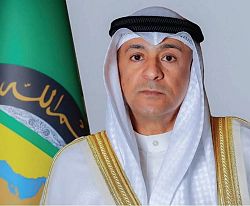
GCC Secretary-General Welcomes UN Security Council’s Position on Houthi Attacks Against Saudi Arabia
The Secretary-General of the Gulf Cooperation Council (GCC) Jasem Albudaiwi has expressed his appreciation for the position conveyed by members of the United Nations Security Council in their presidential statement regarding the attacks carried out by the Houthi terrorist militia against the Kingdom of Saudi Arabia.

South Korea's Exports Surpass $1 Trillion for First Time
Korea's exports surpassed one trillion dollars for the first time this year, driven by strong global demand for semiconductors.

Al Nassr Beat Al Fateh 3-0 in Saudi Football League
Al Nassr defeated Al Fateh 3-0 in the opening round of the Saudi Pro League, known as the Roshn Saudi League.
Last Update: ،
2026/11/20
Time
07:27:58
Latest News:
 Minister of Information: We Won't Allow Civilian Facilities to Be Turned into Threat to Regional Security, ..
Taiz Governor Discusses Humanitarian Crisis, Siege Impacts with EU Ambassador
Yemen, IOM Discuss Urgent Aid for Displaced People in Lahj, Taiz
Ministry of Agriculture Discusses Satellite-Based Fishing Vessel Monitoring System with FAO
Yemen, Malta Discuss Enhanced Maritime Security Cooperation
Latest News:
Minister of Information: We Won't Allow Civilian Facilities to Be Turned into Threat to Regional Security, ..
Taiz Governor Discusses Humanitarian Crisis, Siege Impacts with EU Ambassador
Yemen, IOM Discuss Urgent Aid for Displaced People in Lahj, Taiz
Ministry of Agriculture Discusses Satellite-Based Fishing Vessel Monitoring System with FAO
Yemen, Malta Discuss Enhanced Maritime Security Cooperation
President Hadi, Crown Prince of Abu Dhabi discuss brotherly relations
[13/06/2018 01:32]

ABU DHABI-SABA
President Abd-Rabbu Mansour Hadi and Sheikh Mohammed bin Zayed bin Sultan Al-Nahyan the Crown Prince of Abu Dhabi, held a summit on Tuesday to discuss aspects of brotherly relations between Yemen and the UAE.
Hadi praised the UAE leadership and people for their participation in defending the Arab identity and common destiny on the Yemeni land, which all Yemenis take pride in.
They discussed the intensifying of joint efforts to liberate the rest of Yemeni territory that is still under the control of the Iranian-backed terrorist Houthi militias.
For his part, the Crown Prince of Abu Dhabi expressed his pleasure at meeting with Hadi, stressing the UAE's commitment to standing by the side of the Yemen leadership and people.
He pointed to the nice coincidence of the meeting with the anniversary of the liberation of Aden from Houthi rebels in 2015.
He said that the destiny of Yemen and the UAE will continue to be one, and Yemen will continue to be one country.
He pointed to the joint sacrifices of the two countries in countering the coup d'état and insurgency in Yemen.
President Hadi and Abu Dhabi Crown Prince also discussed the humanitarian aid topic.
During his visit, Hadi met senior other UAE officials. He has already returned to his temporary residence in the Saudi capital Riyadh.
Key words:
SABA President - participation - humanitarian - intensifying - President - coincidence - anniversary - During - commitment - liberation -
Foreign Minister: Security of Red Sea Begins with Yemen's Stability, Restoring State Authority
Minister of Information: We Won't Allow Civilian Facilities to Be Turned into Threat to Regional Security, Navigation
Yemen, IOM Discuss Urgent Aid for Displaced People in Lahj, Taiz
Yemen’s Ambassador Discusses Latest Developments with Jordanian Official
Yemen Rights Network Documents 45 Houthi Violations in Taiz Over 73 Hours
Yemen Condemns Israeli Incursions into Southern Syria
Yemen Issues Law Designating Houthis a Terrorist Organization
Arab Parliament Welcomes Law Designating Houthis as Terrorist Organization
Yemen Condemns Iranian Attacks on Kuwait, Bahrain and UAE Oil Tanker
Yemen Stresses Climate Adaptation, Calls for Increased Funding for Conflict-Affected Countries