Taiz Local Authority Calls for Urgent Investigation into Suspected Toxic Shells
The local authority in Taiz has called for an urgent technical investigation into reports from the al-Aqroudh and Kahlan fronts alleging that Houthi forces used shells suspected of containing internationally banned toxic substances.
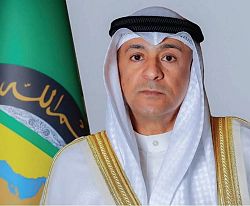
GCC Secretary-General Welcomes UN Security Council’s Position on Houthi Attacks Against Saudi Arabia
The Secretary-General of the Gulf Cooperation Council (GCC) Jasem Albudaiwi has expressed his appreciation for the position conveyed by members of the United Nations Security Council in their presidential statement regarding the attacks carried out by the Houthi terrorist militia against the Kingdom of Saudi Arabia.

Brent Crude Futures Rise 12 Cents
Oil prices remained mostly unchanged in early Asian trading on Thursday following gains from the previous session and a sharp monthly increase.

Al Nassr Beat Al Fateh 3-0 in Saudi Football League
Al Nassr defeated Al Fateh 3-0 in the opening round of the Saudi Pro League, known as the Roshn Saudi League.
Last Update: ،
2026/10/29
Time
07:21:54
Latest News:
 Prime Minister Issues Decision to Establish Government Communication Center
Human Access: Thousands of Displaced Yemeni Families Struggle to Rebuild Their Lives
Yemen, FAO Review Food Security and Resilience Project Progress
Government Reaffirms Commitment to Ending Taiz Siege, Calls for Expanded Houthi Terrorist Designation
Transport Ministry: Repeated Attacks on Aden International Airport Threaten Lives
Latest News:
Prime Minister Issues Decision to Establish Government Communication Center
Human Access: Thousands of Displaced Yemeni Families Struggle to Rebuild Their Lives
Yemen, FAO Review Food Security and Resilience Project Progress
Government Reaffirms Commitment to Ending Taiz Siege, Calls for Expanded Houthi Terrorist Designation
Transport Ministry: Repeated Attacks on Aden International Airport Threaten Lives
Yemen’s Ambassador Discusses Strengthening Economic, Trade, Investment Partnerships with Canada’s Industry Minister
[29/04/2026 01:28]

OTTAWA – SABA
Yemen’s Ambassador to Canada, the Dean of the Arab Diplomatic Corps, Jamal al-Sallal, held talks with Canada’s Minister of Industry, the Minister responsible for the Economic Development Agency of Canada for the Regions of Quebec, Mélanie Joly, on enhancing economic, trade and investment partnerships and exploring opportunities for joint cooperation.
During the meeting, which also included ambassadors of Gulf Cooperation Council (GCC) countries, Ambassador al-Sallal stressed that Yemen views Canada not merely as a traditional trading partner, but as an advanced model of institutional stability.
He noted that the rule of law, institutional independence and clear regulatory frameworks are key factors in attracting long-term investment, adding that these elements open the door to building sustainable cooperation amid an increasingly volatile global environment.
He further highlighted that partnership with Canada could add an important strategic dimension, particularly in light of the opportunities provided by the Canada–United States–Mexico Agreement (CUSMA), which enables access to North American markets through similar trade arrangements.
In a related context, Ambassador al-Sallal emphasized that despite current challenges, Yemen represents a promising long-term strategic opportunity that requires a realistic approach based on risk management and direct engagement rather than avoidance.
He pointed out that risks in Yemen can be managed through effective regional and international partnerships, supported by key countries such as Saudi Arabia, and through instruments including investment financing, sovereign wealth funds, and multilateral cooperation frameworks.
The Ambassador also underscored Yemen’s significant potential, citing its strategic location linking East and West via the Bab al-Mandeb Strait, its proximity to the Horn of Africa and its access to the Red Sea, Arabian Sea, and Indian Ocean.
He noted that Yemen boasts over 2,500 kilometers of coastline, numerous islands, abundant natural resources, rich biodiversity, and a young, educated population representing approximately 60 percent of its citizens.
Ambassador al-Sallal welcomed investors and companies from Canada and GCC countries, calling on them to contribute to reconstruction efforts.
He outlined investment opportunities across sectors including oil, gas, and minerals; renewable energy such as solar, wind, and marine energy; as well as tourism, modern agriculture, technology, artificial intelligence, and other promising fields.
The meeting also addressed geopolitical challenges stemming from ongoing regional conflicts, including tensions in the Red Sea and their impact on global trade flows and investor confidence, particularly amid the ongoing reconfiguration of global supply chains.
At the conclusion of the meeting, participants emphasized that the success of any future partnership depends on complementary roles: GCC countries bring capital, stability, and infrastructure; Canada offers technology and expertise; while Yemen represents a promising strategic opportunity for the future.
Key words:
SABA Yemen’s - Canada–United - States–Mexico - reconfiguration - reconstruction - infrastructure - Ambassador - approximately - international - institutional -
Taiz Local Authority Calls for Urgent Investigation into Suspected Toxic Shells
Prime Minister Issues Decision to Establish Government Communication Center
Human Access: Thousands of Displaced Yemeni Families Struggle to Rebuild Their Lives
Yemen, FAO Review Food Security and Resilience Project Progress
Government Reaffirms Commitment to Ending Taiz Siege, Calls for Expanded Houthi Terrorist Designation
Transport Ministry: Repeated Attacks on Aden International Airport Threaten Lives
Houthi Militias Blamed for 75 Crimes, Violations in 48 Hours in Taiz
Yemen Calls for Fair Funding to Protect Biodiversity in Least Developed and Conflict-Affected Countries
President al-Alimi Launches Package of Relief Projects from King Salman Center to Support Taiz's Resilience, Help those Affected Across Yemen
Yemeni Ambassador Discusses Developments in Yemen with Czech Parliament Speaker