Army Repels Houthi Infiltration Attempt in
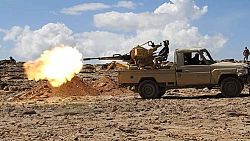
Yemeni government forces repelled a Houthi infiltration attempt in southeastern Taiz on Sunday after destroying a militia vehicle with artillery fire, leaving several militants dead or wounded.

Gaza Death Toll Rises to 73,375, Health Authorities Say
The death toll from the ongoing Israeli military offensive in the Gaza Strip has risen to 73,375, with 174,220 people wounded since October 7, 2023, according to health authorities in the enclave.

Korea's Travel Account Posts Surplus for 3rd Month in Row
South Korea reported a surplus in its tourism account for the third month in a row in May, driven by a rise in the number of foreign tourists, reaching $220.5 million in May compared to a deficit of $820.2 million in the same month last year.

England Claim FIFA World Cup 2026 Bronze with Victory over France
England secured third place at the 2026 FIFA World Cup after defeating France 6-4 in the third-place playoff on Saturday.
Last Update: ،
2026/08/03
Time
02:15:21
Latest News:
 Yemeni Ambassador, Japanese Lawmaker Discuss Expanding Bilateral Partnership
Yemen Joins International Conference on Combating Islamophobia
Minister of State Discusses Strengthening Cooperation in Women's Empowerment with Chinese Embassy Chargé ..
Republican Decree Retains Dr. Ahd Ja'sous as Minister of State for Women's Affairs
Rights Report: Houthi Crimes and Abuses Deepen Yemen's Humanitarian Crisis
Latest News:
Yemeni Ambassador, Japanese Lawmaker Discuss Expanding Bilateral Partnership
Yemen Joins International Conference on Combating Islamophobia
Minister of State Discusses Strengthening Cooperation in Women's Empowerment with Chinese Embassy Chargé ..
Republican Decree Retains Dr. Ahd Ja'sous as Minister of State for Women's Affairs
Rights Report: Houthi Crimes and Abuses Deepen Yemen's Humanitarian Crisis
PM: Peace strategic choice for government, but there is no reliable partner
[28/09/2025 01:38]
ADEN-SABA
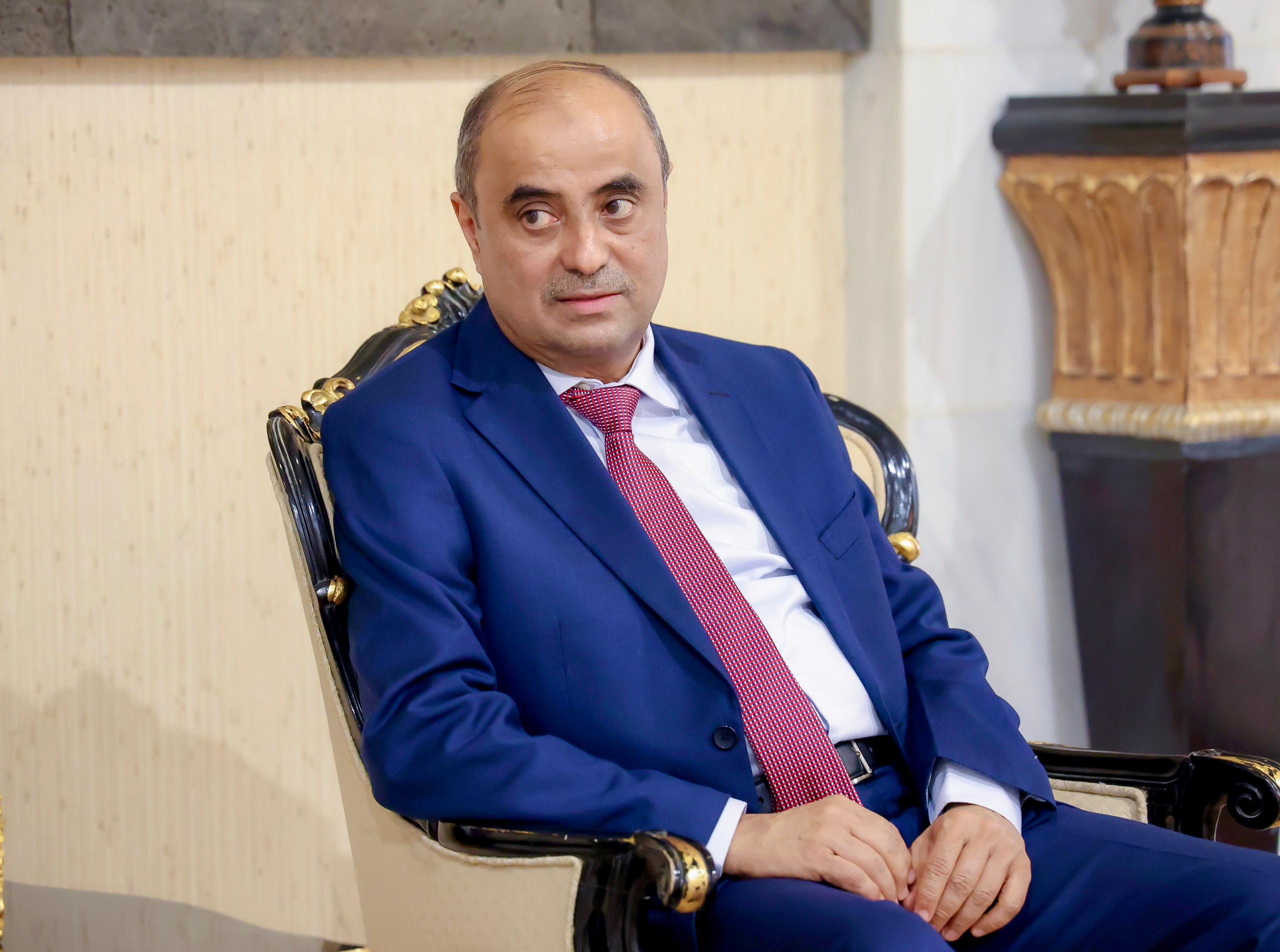
The Prime Minister Salem bin Braik stated that the recent improvement in the exchange rate of the national currency was not a coincidence, but rather the result of the integration of financial and monetary policies adopted by the government in coordination with the Central Bank of Yemen (CBY).
In an interview with the newspaper 'Asharq al-Awsat' published in its issue today, Sunday, he explained that the currency does not improve through slogans, but through difficult decisions and fiscal discipline.
He said "We have succeeded in curbing speculation, regulating the market, efficiently managing limited resources and imposing transparent mechanisms for financing imports."
He went on saying "among the measures taken by the government are the formation of the National Committee for Regulating and Financing Imports, the prohibition of dealing in foreign currencies in the domestic market, rationalizing public spending and enhancing revenues, activating monitoring and transparency tools".
Bin Braik explained that these measures have led to a significant decline in demand for foreign currency and reduced the gaps that were causing the rial to sharply depreciate, stressing that what happened proves that institutional reforms can make a difference even in the absence of primary revenues, referring to the halt in crude oil exports, which represent 65 percent of public revenues.
The Prime Minister underscored the importance of giving the government an opportunity to work with full powers away from obstacles, underlining the importance of the partners' support to strengthen the position of the national currency.
He made it clear that this improvement needs additional structural measures to ensure its sustainability, calling for courageous decisions that match the nature of the challenges.
The status quo is a difficult stage requires the government to fight a parallel battle alongside the battle to restore the state, Bin Braik stressed.
He noted that the most prominent national challenges include the enormous pressure on basic services, weak revenues due to the halt of oil exports, the complexities of managing local resources and the increasingly growing humanitarian needs.
The Prime Minister warned that the Houthi militias are waging a systematic economic war, using the economy as a weapon to weaken the state and exacerbate the humanitarian crisis.
He made it clear that "The situation in Yemen is no longer merely a national crisis but rather it has become part of the international security equation from the Red Sea to global shipping routes".
Regarding the peace process, Bin Braik stressed that peace is a strategic choice for the Yemeni government, but the problem is that there is no serious and responsible partner.
He blamed Houthi militias for blocking peace efforts and proposal throughout the past years.
The Houthis have repeatedly proved that they have never sought to end the conflict and make peace. The international community is very familiar with this, he stated.
Bin Braik blamed the Iranian regime for prolonging the conflict saying the continued flow of weapons and advanced equipment from Tehran to the militias, as revealed by repeated seizures, is a solid evidence that the Houthis and their sponsors have no genuine intention for peace.
The Prime Minister outlined the features of the desired peace through the restoration of the legal system, the extension of state authority over all its territories, adherence to the constitution and national principles and the implementation of the three references, namely the UN Security Council Resolution No. 2216.
The Prime Minister Salem bin Braik stated that the recent improvement in the exchange rate of the national currency was not a coincidence, but rather the result of the integration of financial and monetary policies adopted by the government in coordination with the Central Bank of Yemen (CBY).
In an interview with the newspaper 'Asharq al-Awsat' published in its issue today, Sunday, he explained that the currency does not improve through slogans, but through difficult decisions and fiscal discipline.
He said "We have succeeded in curbing speculation, regulating the market, efficiently managing limited resources and imposing transparent mechanisms for financing imports."
He went on saying "among the measures taken by the government are the formation of the National Committee for Regulating and Financing Imports, the prohibition of dealing in foreign currencies in the domestic market, rationalizing public spending and enhancing revenues, activating monitoring and transparency tools".
Bin Braik explained that these measures have led to a significant decline in demand for foreign currency and reduced the gaps that were causing the rial to sharply depreciate, stressing that what happened proves that institutional reforms can make a difference even in the absence of primary revenues, referring to the halt in crude oil exports, which represent 65 percent of public revenues.
The Prime Minister underscored the importance of giving the government an opportunity to work with full powers away from obstacles, underlining the importance of the partners' support to strengthen the position of the national currency.
He made it clear that this improvement needs additional structural measures to ensure its sustainability, calling for courageous decisions that match the nature of the challenges.
The status quo is a difficult stage requires the government to fight a parallel battle alongside the battle to restore the state, Bin Braik stressed.
He noted that the most prominent national challenges include the enormous pressure on basic services, weak revenues due to the halt of oil exports, the complexities of managing local resources and the increasingly growing humanitarian needs.
The Prime Minister warned that the Houthi militias are waging a systematic economic war, using the economy as a weapon to weaken the state and exacerbate the humanitarian crisis.
He made it clear that "The situation in Yemen is no longer merely a national crisis but rather it has become part of the international security equation from the Red Sea to global shipping routes".
Regarding the peace process, Bin Braik stressed that peace is a strategic choice for the Yemeni government, but the problem is that there is no serious and responsible partner.
He blamed Houthi militias for blocking peace efforts and proposal throughout the past years.
The Houthis have repeatedly proved that they have never sought to end the conflict and make peace. The international community is very familiar with this, he stated.
Bin Braik blamed the Iranian regime for prolonging the conflict saying the continued flow of weapons and advanced equipment from Tehran to the militias, as revealed by repeated seizures, is a solid evidence that the Houthis and their sponsors have no genuine intention for peace.
The Prime Minister outlined the features of the desired peace through the restoration of the legal system, the extension of state authority over all its territories, adherence to the constitution and national principles and the implementation of the three references, namely the UN Security Council Resolution No. 2216.
Key words:
implementation - sustainability - institutional - rationalizing - Regarding - international - transparency - coordination - humanitarian - increasingly -
Yemeni Ambassador, Japanese Lawmaker Discuss Expanding Bilateral Partnership
Yemen Joins International Conference on Combating Islamophobia
Republican Decree Retains Dr. Ahd Ja'sous as Minister of State for Women's Affairs
Marib Approves Emergency Response to Measles Outbreak
Foreign Minister, Japanese Ambassador Discuss Stronger Bilateral Cooperation
Prime Minister Says Gov't Determined to Make Comprehensive Reforms Program
Prime Minister : Private Sector Key Partner In Achieving Economic Recovery
Yemeni, Egyptian FMs Discuss Bilateral Ties, Regional Security
Four Injured as Fire Destroys 23 Shelters at Marib Displacement Camp
Hadramout Security Forces Arrest Key Suspects in Journalist's Killing