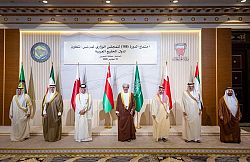
GCC's Ministerial Council Confirms its Support for Yemen's Unity, Sovereignty, Calls for Designating Houthi Militias Terrorist Group
The Gulf Cooperation Council (GCC) affirmed the sovereignty of the Republic of Yemen and the unity of its territory, calling on the UN Security Council to implement its resolutions regarding Yemen and the rebellion of the Iranian-backed Houthi terrorist militias.
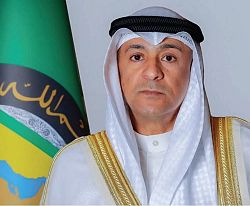
GCC Secretary-General Welcomes UN Security Council’s Position on Houthi Attacks Against Saudi Arabia
The Secretary-General of the Gulf Cooperation Council (GCC) Jasem Albudaiwi has expressed his appreciation for the position conveyed by members of the United Nations Security Council in their presidential statement regarding the attacks carried out by the Houthi terrorist militia against the Kingdom of Saudi Arabia.

Brent Crude Futures Rise 12 Cents
Oil prices remained mostly unchanged in early Asian trading on Thursday following gains from the previous session and a sharp monthly increase.

Al Nassr Beat Al Fateh 3-0 in Saudi Football League
Al Nassr defeated Al Fateh 3-0 in the opening round of the Saudi Pro League, known as the Roshn Saudi League.
Last Update: ،
2026/10/18
Time
06:30:35
Latest News:
 Yemeni Ambassador Discusses Escalating Houthi Threats with US Assistant Secretary of State
Zouba, Indonesian Deputy Foreign Minister Discuss Cultural and Educational Cooperation
Government Calls on Security Council to Condemn Houthi Escalation in Yemen
Al-Soqatari, al-Sharjabi Participate in Operational, Technical Mission of Water and Irrigation Management ..
Parliament Speaker Praises Kuwait’s Support for Yemen
Latest News:
Yemeni Ambassador Discusses Escalating Houthi Threats with US Assistant Secretary of State
Zouba, Indonesian Deputy Foreign Minister Discuss Cultural and Educational Cooperation
Government Calls on Security Council to Condemn Houthi Escalation in Yemen
Al-Soqatari, al-Sharjabi Participate in Operational, Technical Mission of Water and Irrigation Management ..
Parliament Speaker Praises Kuwait’s Support for Yemen
September Revolution Laid Foundations for an Open Foreign Policy
[28/09/2026 12:04]
ADEN-SABA
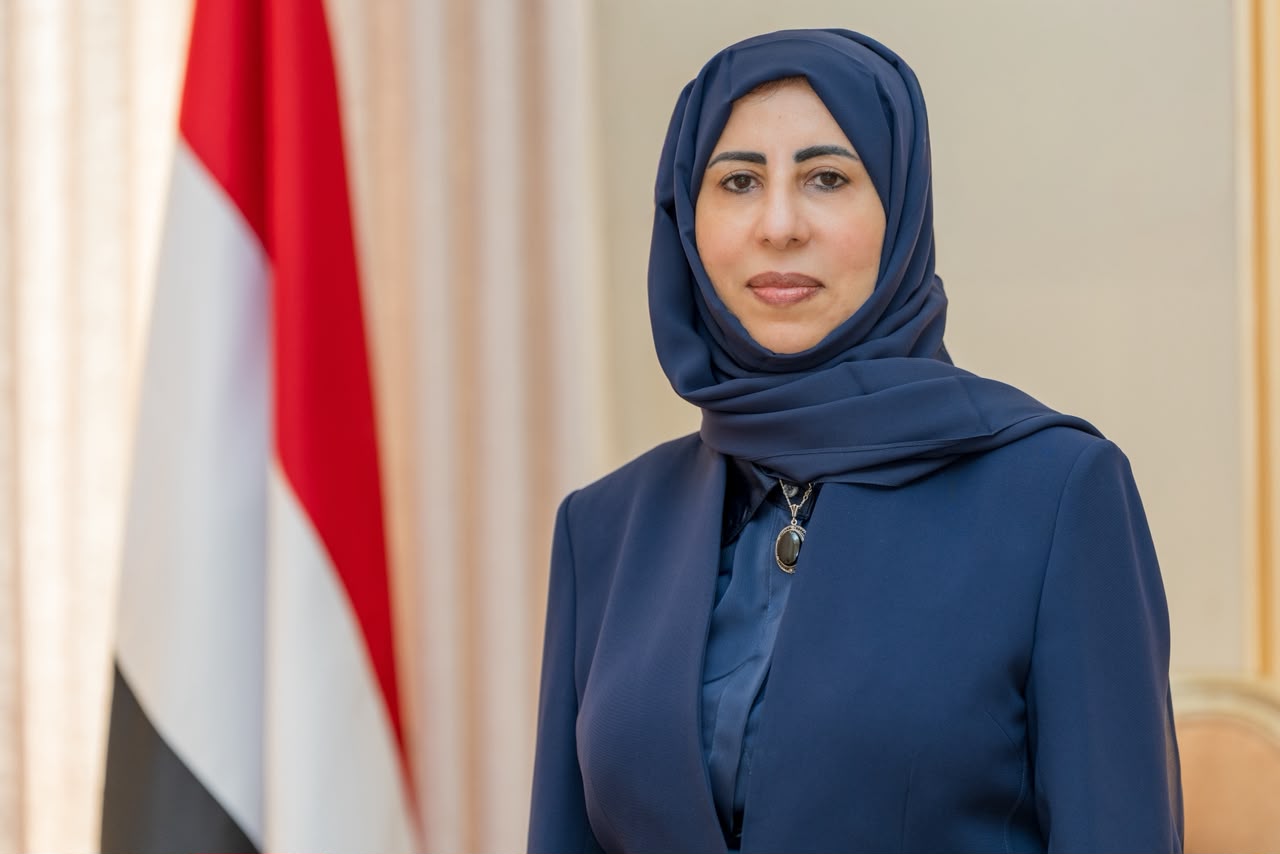
Foreign Minister Afrah al-Zouba said the September 26, 1962 Revolution established Yemenis’ right to government based on popular will and laid the foundations for a national state founded on equal citizenship.
In an interview with Saba marking the 64th anniversary of the revolution, al-Zouba said the revolution ended decades of isolation and autocratic rule under the imamate and launched a national project to build state institutions and expand political and social rights.
She said the revolution transformed Yemen from an isolated state into a sovereign republic with a modern constitutional system, national army and administrative institutions. It also expanded access to education, healthcare and infrastructure, increased public participation and strengthened women’s role in education, employment and public life.
Al-Zouba said the revolution also established a foreign policy based on openness, good-neighborly relations, respect for sovereignty and non-interference in the internal affairs of other states. The new republic quickly gained broad international recognition, strengthened its representation at the United Nations and Arab League, contributed to the establishment of the Organization of Islamic Cooperation, and expanded Yemen’s diplomatic relations and international engagement.
She stressed that the revolution restored Yemenis’ right to equal citizenship and established the principle that government is a responsibility to serve the people, regardless of lineage, sect or region.
Al-Zouba said the sacrifices of the revolution’s leaders, military officers, intellectuals, tribesmen, workers, expatriates and other segments of society culminated in the defense of the republic during the 70-Day Siege and extended the revolution’s values of freedom, dignity, justice and equality across Yemen, eventually leading to independence and Yemeni unity.
She said the challenges that followed the revolution did not diminish the legitimacy of its objectives, but underscored the need to complete its goals through reform, the rule of law, stronger institutions and accountable management of public resources.
Al-Zouba accused the Houthi militia of seeking to reproduce the essence of the former imamate by placing its authority above state institutions, undermining equal citizenship, using education for sectarian mobilization, suppressing freedoms and exploiting public resources, with military and financial support from Iran.
She praised Yemenis who have continued to uphold the values of September despite repression, particularly in Houthi-controlled areas, and hailed the armed forces, security forces and popular resistance fighters defending the republic.
“Honoring the September Revolution requires preserving the republic, restoring its institutions, placing weapons and sovereign decision-making in the hands of the state, and building a future in which Yemenis can live with security, rights and dignity,” al-Zouba said. “September opened the path to freedom for our people, and our responsibility is to protect that path and advance toward a just state capable of serving all its citizens.”
Foreign Minister Afrah al-Zouba said the September 26, 1962 Revolution established Yemenis’ right to government based on popular will and laid the foundations for a national state founded on equal citizenship.
In an interview with Saba marking the 64th anniversary of the revolution, al-Zouba said the revolution ended decades of isolation and autocratic rule under the imamate and launched a national project to build state institutions and expand political and social rights.
She said the revolution transformed Yemen from an isolated state into a sovereign republic with a modern constitutional system, national army and administrative institutions. It also expanded access to education, healthcare and infrastructure, increased public participation and strengthened women’s role in education, employment and public life.
Al-Zouba said the revolution also established a foreign policy based on openness, good-neighborly relations, respect for sovereignty and non-interference in the internal affairs of other states. The new republic quickly gained broad international recognition, strengthened its representation at the United Nations and Arab League, contributed to the establishment of the Organization of Islamic Cooperation, and expanded Yemen’s diplomatic relations and international engagement.
She stressed that the revolution restored Yemenis’ right to equal citizenship and established the principle that government is a responsibility to serve the people, regardless of lineage, sect or region.
Al-Zouba said the sacrifices of the revolution’s leaders, military officers, intellectuals, tribesmen, workers, expatriates and other segments of society culminated in the defense of the republic during the 70-Day Siege and extended the revolution’s values of freedom, dignity, justice and equality across Yemen, eventually leading to independence and Yemeni unity.
She said the challenges that followed the revolution did not diminish the legitimacy of its objectives, but underscored the need to complete its goals through reform, the rule of law, stronger institutions and accountable management of public resources.
Al-Zouba accused the Houthi militia of seeking to reproduce the essence of the former imamate by placing its authority above state institutions, undermining equal citizenship, using education for sectarian mobilization, suppressing freedoms and exploiting public resources, with military and financial support from Iran.
She praised Yemenis who have continued to uphold the values of September despite repression, particularly in Houthi-controlled areas, and hailed the armed forces, security forces and popular resistance fighters defending the republic.
“Honoring the September Revolution requires preserving the republic, restoring its institutions, placing weapons and sovereign decision-making in the hands of the state, and building a future in which Yemenis can live with security, rights and dignity,” al-Zouba said. “September opened the path to freedom for our people, and our responsibility is to protect that path and advance toward a just state capable of serving all its citizens.”
Key words:
SABA Foreign - “Honoring - administrative - revolution’s - infrastructure - constitutional - responsibility - representation - international - participation -
Yemeni Ambassador Discusses Escalating Houthi Threats with US Assistant Secretary of State
Zouba, Indonesian Deputy Foreign Minister Discuss Cultural and Educational Cooperation
Al-Khanbashi Praises UNDP Interventions in Hadramout
Iraqi Prime Minister Receives Foreign Minister
Yemen Welcomes European Council's Statement on Houthi Terrorist Militias' Escalation
Foreign Minister: Tehran Regime Party to War on Yemenis, Not Mediator
Foreign Minister Holds Talks with Indonesian Counterpart on Yemen, Regional Developments
President al-Alimi Discusses National and Regional Developments with UK Foreign Secretary
UN Security Council Condemns Houthi Escalation in Yemen, Reaffirms Saudi Arabia’s Right to Self-Defence
President al-Alimi asks about Colleagues' Safety Following Houthi Missile Attack on Maashiq Palace