YWEF Documents 4,651 Houthi Violations Against Mosques and Religious Minorities
The Yemeni Women Empowerment Foundation (YWEF) has documented 4,651 crimes and violations committed by the Iranian-backed Houthi terrorist militia against mosques, religious figures and minorities across 14 provinces between January 2014 and August 21, 2026.
10 Palestinians Killed in Gaza as Israeli Forces Arrest Palestinian Minister
Ten Palestinians, including nine Palestinian police officers and personnel, were killed and others injured in Israeli airstrikes and shelling targeting northern and central Gaza Strip on Wednesday.
German Exports Rise 3.9 Percent
The total of German exports increased by 3.9 percent during the first half of 2026 compared to the same period last year, reaching 817.8 billion euros.

Al Nassr Beat Al Fateh 3-0 in Saudi Football League
Al Nassr defeated Al Fateh 3-0 in the opening round of the Saudi Pro League, known as the Roshn Saudi League.
Last Update: ،
2026/08/23
Time
01:03:59
Latest News:
 YWEF Documents 4,651 Houthi Violations Against Mosques and Religious Minorities
Houthi Violations Leave Nearly 59,000 Civilians Dead or Injured Since 2015: Rights Group
Yemen Condemns Israeli Escalation in Gaza and E1 Settlement Plan
Foreign Minister And Her Djiboutian Counterpart Discuss Joint Cooperation
Foreign Minister Discusses Cooperation, Coordinating Positions with Mauritanian Counterpart
Latest News:
YWEF Documents 4,651 Houthi Violations Against Mosques and Religious Minorities
Houthi Violations Leave Nearly 59,000 Civilians Dead or Injured Since 2015: Rights Group
Yemen Condemns Israeli Escalation in Gaza and E1 Settlement Plan
Foreign Minister And Her Djiboutian Counterpart Discuss Joint Cooperation
Foreign Minister Discusses Cooperation, Coordinating Positions with Mauritanian Counterpart
Parliament Speaker participates in conference for parliamentary leaders
[30/07/2025 05:55]
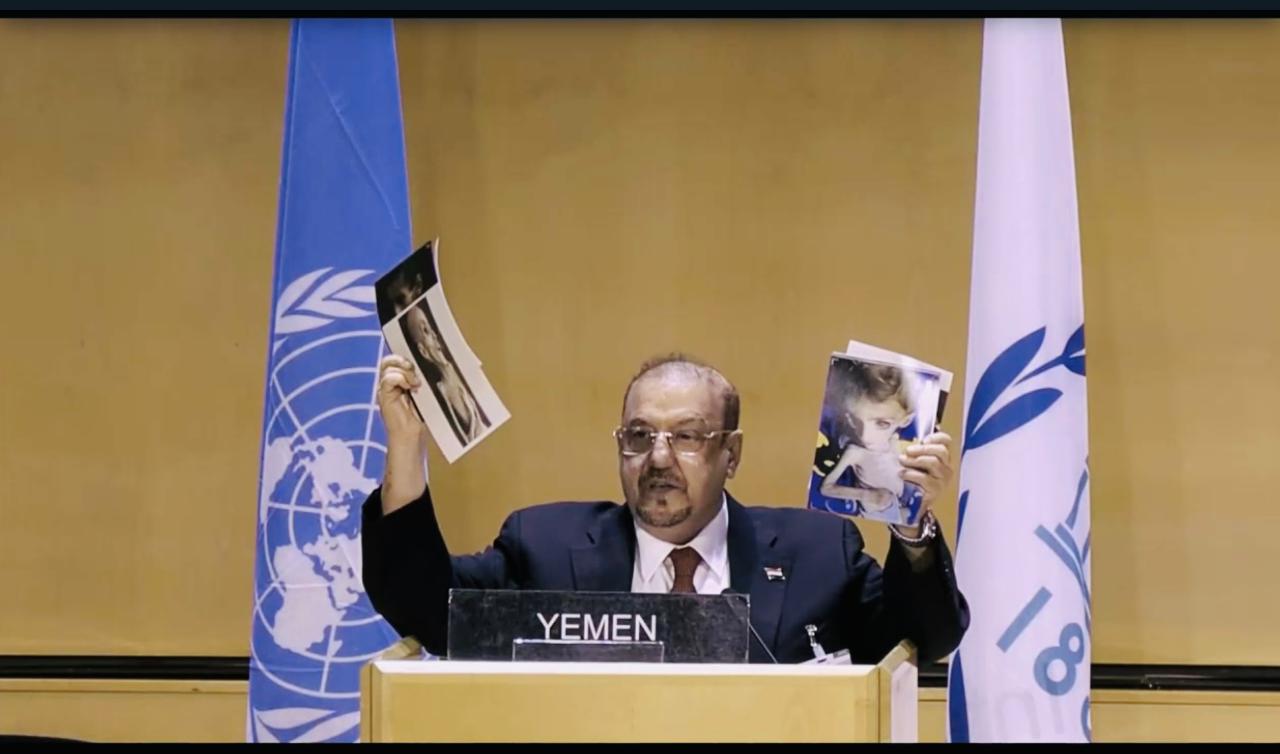
GENEVA - SABA
The Speaker of the Parliament Sheikh Sultan al-Barkani participated Wednesday in the proceedings of the sixth world conference of parliamentary leaders, organized by the Inter-Parliamentary Union in cooperation with the United Nations under the slogan "A Troubled World: Parliamentary Cooperation and Pluralism for Peace, Justice, and Prosperity for All."
The conference is being held from July 29 to 31, with the participation of parliamentary leaders from various countries around the world.
In his speech at the conference, Sheikh al-Barkani addressed the actions of the terrorist Houthi militias in Yemen, including the siege and starvation of children, violations of human rights, destruction of infrastructure, and the imposition of a foreign identity that strips the people of their national, religious, and historical identity.
He pointed out that this rogue gang, which operates outside the state, is unfortunately supported by Iran, wreaking havoc in the region, attacking maritime interests, disrupting international trade, and creating burdens on humanity everywhere.
Their adventures even extend beyond borders, inviting aggression against what remains of the already modest infrastructure.
Al-Barkani highlighted what Iran has provided to the terrorist Houthi militias, specifically a ship containing 750 tons of weapons, including drones and missiles, all documented with audio and video evidence.
He noted that while maritime routes in the Red Sea are closed, the world does not question why they were closed or punish those responsible. Instead, some countries engage in deals with the aggressor to secure their ships while allowing others to pass through.
He stated, "When Western interests are at stake, it becomes a 'global threat,' but when weak nations are the victims and tens of thousands of Yemeni civilians are killed, and the weak bear the consequences of the adventurous gangs' aggression, it becomes 'complicated' and requires study."
He added, "Indeed, as the title of this conference suggests, this is a troubled world, everything is disrupted: international relations, justice standards, norms for dealing with international conflicts, the monopoly of power and wealth and human rights.
All this chaos is not due to a lack of or weak legislation, but rather the absence and weakness of the consciences responsible for upholding and enforcing these laws.
This is because the countries that hold decision-making power create conflicts according to their whims and interests, and when they have fulfilled their needs, they return to mediation and impose solutions as they see fit, with Palestine being a prime example… colonial powers created Israel, and they provide it with care, protection and means of destruction, while they themselves speak of peace and send their envoys to mediate satisfactory solutions for the occupier, reinforcing the occupation."
Al-Barkani pointed out that the abuse of international charters has become commonplace, as if international law exists only to be imposed on the weak and is suspended for the strong. "Human rights" and "sovereignty of states" are raised when the adversary is a country that does not align with the West, but those rights are trampled when an entire people is slaughtered in Gaza, or refugee camps are bombed, or entire neighborhoods are erased from existence, while this occurs day and night, and the world watches without giving it any weight.
The Parliament Speaker questioned, "These images, gentlemen, of what is happening in Palestine to the children and women who are dying of hunger, are they a form of self-defense? This is strange and odd. Does this give Israel a blank check for genocide and the killing of women, children, and the elderly through bullets or starvation? Does it justify the complete destruction of Gaza, and airstrikes on the West Bank, Lebanon, Syria, and Yemen? Where are the limits of 'self-defense'? Where are the controls of 'international humanitarian law'? Or is there a decision that the blood of our peoples does not count in the equation of humanity?"
He stated, "Here I am, from this platform, raising these images to you as bloody cries of poverty and famine, of deliberate starvation and of the killing that has become daily bread on the tables of children in Gaza.
These images do not seek sympathy; rather, they judge the conscience of this world that is lavish in silence.
In Gaza, an entire people is being exterminated under the eyes of the world, and war crimes are being documented with audio and video, yet they are met with statements of 'the right to self-defense,' while the victim is even prevented from voicing their plight. Why? Because some lives in this world are valued more than others."
He emphasized that amid this global turmoil, the responsibility of national and international parliaments stands as a fundamental pillar in promoting peace, enforcing respect for legislation and international treaties, and holding violators accountable without exception.
The Speaker affirmed that parliaments are not just discussion rooms but tools of global conscience, and their duty is to rise above narrow political calculations.
The Speaker of the Parliament Sheikh Sultan al-Barkani participated Wednesday in the proceedings of the sixth world conference of parliamentary leaders, organized by the Inter-Parliamentary Union in cooperation with the United Nations under the slogan "A Troubled World: Parliamentary Cooperation and Pluralism for Peace, Justice, and Prosperity for All."
The conference is being held from July 29 to 31, with the participation of parliamentary leaders from various countries around the world.
In his speech at the conference, Sheikh al-Barkani addressed the actions of the terrorist Houthi militias in Yemen, including the siege and starvation of children, violations of human rights, destruction of infrastructure, and the imposition of a foreign identity that strips the people of their national, religious, and historical identity.
He pointed out that this rogue gang, which operates outside the state, is unfortunately supported by Iran, wreaking havoc in the region, attacking maritime interests, disrupting international trade, and creating burdens on humanity everywhere.
Their adventures even extend beyond borders, inviting aggression against what remains of the already modest infrastructure.
Al-Barkani highlighted what Iran has provided to the terrorist Houthi militias, specifically a ship containing 750 tons of weapons, including drones and missiles, all documented with audio and video evidence.
He noted that while maritime routes in the Red Sea are closed, the world does not question why they were closed or punish those responsible. Instead, some countries engage in deals with the aggressor to secure their ships while allowing others to pass through.
He stated, "When Western interests are at stake, it becomes a 'global threat,' but when weak nations are the victims and tens of thousands of Yemeni civilians are killed, and the weak bear the consequences of the adventurous gangs' aggression, it becomes 'complicated' and requires study."
He added, "Indeed, as the title of this conference suggests, this is a troubled world, everything is disrupted: international relations, justice standards, norms for dealing with international conflicts, the monopoly of power and wealth and human rights.
All this chaos is not due to a lack of or weak legislation, but rather the absence and weakness of the consciences responsible for upholding and enforcing these laws.
This is because the countries that hold decision-making power create conflicts according to their whims and interests, and when they have fulfilled their needs, they return to mediation and impose solutions as they see fit, with Palestine being a prime example… colonial powers created Israel, and they provide it with care, protection and means of destruction, while they themselves speak of peace and send their envoys to mediate satisfactory solutions for the occupier, reinforcing the occupation."
Al-Barkani pointed out that the abuse of international charters has become commonplace, as if international law exists only to be imposed on the weak and is suspended for the strong. "Human rights" and "sovereignty of states" are raised when the adversary is a country that does not align with the West, but those rights are trampled when an entire people is slaughtered in Gaza, or refugee camps are bombed, or entire neighborhoods are erased from existence, while this occurs day and night, and the world watches without giving it any weight.
The Parliament Speaker questioned, "These images, gentlemen, of what is happening in Palestine to the children and women who are dying of hunger, are they a form of self-defense? This is strange and odd. Does this give Israel a blank check for genocide and the killing of women, children, and the elderly through bullets or starvation? Does it justify the complete destruction of Gaza, and airstrikes on the West Bank, Lebanon, Syria, and Yemen? Where are the limits of 'self-defense'? Where are the controls of 'international humanitarian law'? Or is there a decision that the blood of our peoples does not count in the equation of humanity?"
He stated, "Here I am, from this platform, raising these images to you as bloody cries of poverty and famine, of deliberate starvation and of the killing that has become daily bread on the tables of children in Gaza.
These images do not seek sympathy; rather, they judge the conscience of this world that is lavish in silence.
In Gaza, an entire people is being exterminated under the eyes of the world, and war crimes are being documented with audio and video, yet they are met with statements of 'the right to self-defense,' while the victim is even prevented from voicing their plight. Why? Because some lives in this world are valued more than others."
He emphasized that amid this global turmoil, the responsibility of national and international parliaments stands as a fundamental pillar in promoting peace, enforcing respect for legislation and international treaties, and holding violators accountable without exception.
The Speaker affirmed that parliaments are not just discussion rooms but tools of global conscience, and their duty is to rise above narrow political calculations.
Key words:
humanity?" He - infrastructure - responsibility - 'international - participation - parliamentary - international - 'complicated' - unfortunately - Parliamentary -
Yemen, Global Environment Facility Discuss Enhancing Support for Environmental and Climate Projects
Yemen Moves to Establish National Maritime Security Committee
Deputy Foreign Minister Receives Copy of Credentials of Thai Ambassador
Houthi Sniper Wounds Girl in Eastern Taiz
Yemeni Embassy Briefs Sudanese Media on Developments and Houthi Threats to Shipping
Al-Muharrami: Restoring State Institutions Is Key to Peace and Stability in Yemen
Minister of Health Discusses INTERSOS Interventions In Health Sector
Minister of Civil Service Meets with UN Envoy's Economic Advisor
President al-Alimi Praised Japan's Vision on Yemen, Region
Planning Ministry, WFP Discuss Strengthening Humanitarian and Development Interventions