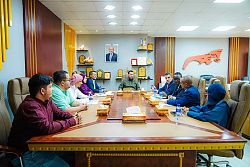
Aden Governor Discusses with UNICEF Strengthening Interventions in Water, Education
Aden Governor, the Minister of State Abdulrahman Sheikh met on Tuesday with UNICEF Deputy Representative in Yemen Obia Ashing, discussing with him strengthening the organization’s support for local authorities in key sectors.
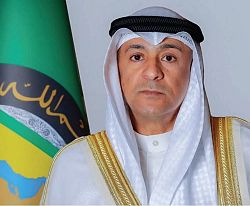
GCC Secretary-General Welcomes UN Security Council’s Position on Houthi Attacks Against Saudi Arabia
The Secretary-General of the Gulf Cooperation Council (GCC) Jasem Albudaiwi has expressed his appreciation for the position conveyed by members of the United Nations Security Council in their presidential statement regarding the attacks carried out by the Houthi terrorist militia against the Kingdom of Saudi Arabia.

Brent Crude Futures Rise 12 Cents
Oil prices remained mostly unchanged in early Asian trading on Thursday following gains from the previous session and a sharp monthly increase.

Al Nassr Beat Al Fateh 3-0 in Saudi Football League
Al Nassr defeated Al Fateh 3-0 in the opening round of the Saudi Pro League, known as the Roshn Saudi League.
Last Update: ،
2026/10/27
Time
06:43:38
Latest News:
 Green Climate Fund Approves Project Worth $28 Million to Develop 'CWIMEWS' in Yemen
Yemen, China Discuss Development and Humanitarian Cooperation
President al-Alimi Calls on Europe to Designate Houthis as Terrorist Organization
Report Documents Houthi Violations Against 107 Women and Children in Taiz
Yemenia Aircraft Makes Safe Landing in Jordan After Hail Strike
Latest News:
Green Climate Fund Approves Project Worth $28 Million to Develop 'CWIMEWS' in Yemen
Yemen, China Discuss Development and Humanitarian Cooperation
President al-Alimi Calls on Europe to Designate Houthis as Terrorist Organization
Report Documents Houthi Violations Against 107 Women and Children in Taiz
Yemenia Aircraft Makes Safe Landing in Jordan After Hail Strike
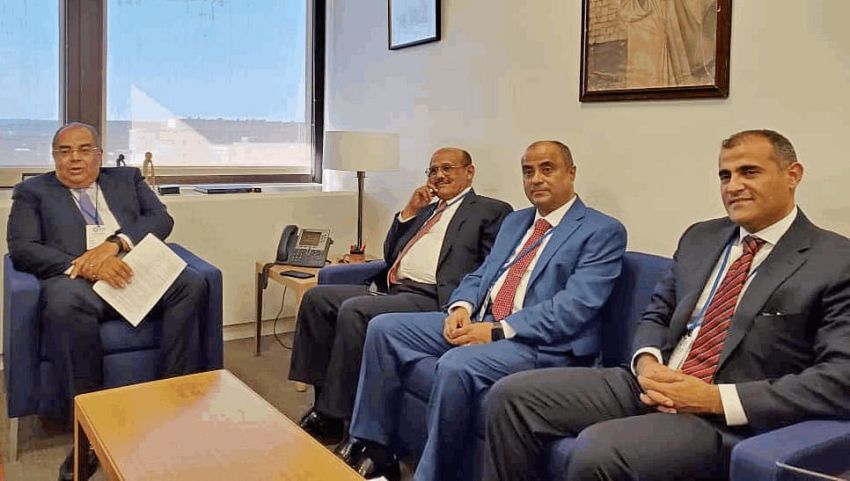
Finance Minister heads our country's delegation to IMF and WB meetings in Washington
[12/10/2022 05:49]
Washington – Saba
Finance Minister Salem Bin Breik headed the Yemeni delegation to the annual meetings of the International Monetary Fund and the World Bank in Washington, DC.
Today, during two separate meetings, Finance Minister Salem Bin Breik and the Governor of the Central Bank of Yemen, Ahmed Al-Mabaqi, discussed with the Executive Director of the Arab and Maldives Group at the International Monetary Fund, Dr. Mahmoud Mohieldin, and the Head of the Middle East and Central Asia Department at the International Monetary Fund, Dr. Jihad.
Azour, developments in the economic situation in Yemen, and the repercussions of rising global prices due to the war in Ukraine on the humanitarian situation in Yemen, with the increase in food insecurity amid rising food and fuel prices, lack of humanitarian aid and scarcity of resources, which exacerbate pressures on the balance of payments.
The emergency food window program established by the Fund to address food insecurity was also discussed, according to which the member state obtains a financial facility equal to 50% of its share in the Fund, in addition to the role that the Fund can play in supporting Yemen to obtain this support due to the increasing need for it.
Finance Minister Salem Bin Breik headed the Yemeni delegation to the annual meetings of the International Monetary Fund and the World Bank in Washington, DC.
Today, during two separate meetings, Finance Minister Salem Bin Breik and the Governor of the Central Bank of Yemen, Ahmed Al-Mabaqi, discussed with the Executive Director of the Arab and Maldives Group at the International Monetary Fund, Dr. Mahmoud Mohieldin, and the Head of the Middle East and Central Asia Department at the International Monetary Fund, Dr. Jihad.
Azour, developments in the economic situation in Yemen, and the repercussions of rising global prices due to the war in Ukraine on the humanitarian situation in Yemen, with the increase in food insecurity amid rising food and fuel prices, lack of humanitarian aid and scarcity of resources, which exacerbate pressures on the balance of payments.
The emergency food window program established by the Fund to address food insecurity was also discussed, according to which the member state obtains a financial facility equal to 50% of its share in the Fund, in addition to the role that the Fund can play in supporting Yemen to obtain this support due to the increasing need for it.
Key words:
Saba Finance - repercussions - International - developments - humanitarian - established - Washington - insecurity - Department - exacerbate -
Aden Governor Discusses with UNICEF Strengthening Interventions in Water, Education
Green Climate Fund Approves Project Worth $28 Million to Develop 'CWIMEWS' in Yemen
Yemen, China Discuss Development and Humanitarian Cooperation
President al-Alimi Calls on Europe to Designate Houthis as Terrorist Organization
Report Documents Houthi Violations Against 107 Women and Children in Taiz
Yemenia Aircraft Makes Safe Landing in Jordan After Hail Strike
Coalition Intercepts and Destroys Four Drones and Three Ballistic Missiles Launched by Houthis Toward Saudi Arabia
Yemeni Rights Network Documents 42 Houthi Violations in Taiz in 48 Hours
Berlin Protest Calls for Lifting Taiz Siege, Designating Houthis as Terrorists
Coalition Carries Out Operation to Neutralize Houthi Threats