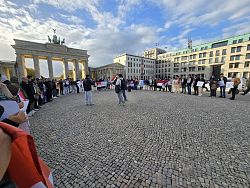
Berlin Protest Calls for Lifting Taiz Siege, Designating Houthis as Terrorists
Members of the Yemeni community in Berlin staged a protest calling on Germany, the European Union, the United Nations and the international community to pressure the Iran-backed Houthi militia to lift the siege on Taiz, reopen roads, ensure freedom of movement and allow humanitarian supplies into the city.
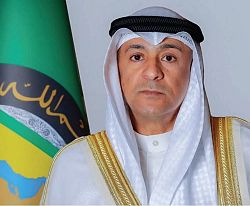
GCC Secretary-General Welcomes UN Security Council’s Position on Houthi Attacks Against Saudi Arabia
The Secretary-General of the Gulf Cooperation Council (GCC) Jasem Albudaiwi has expressed his appreciation for the position conveyed by members of the United Nations Security Council in their presidential statement regarding the attacks carried out by the Houthi terrorist militia against the Kingdom of Saudi Arabia.

Brent Crude Futures Rise 12 Cents
Oil prices remained mostly unchanged in early Asian trading on Thursday following gains from the previous session and a sharp monthly increase.

Al Nassr Beat Al Fateh 3-0 in Saudi Football League
Al Nassr defeated Al Fateh 3-0 in the opening round of the Saudi Pro League, known as the Roshn Saudi League.
Last Update: ،
2026/10/27
Time
07:30:16
Latest News:
 Berlin Protest Calls for Lifting Taiz Siege, Designating Houthis as Terrorists
Coalition Carries Out Operation to Neutralize Houthi Threats
Yemen’s Human Rights Ministry Warns of Humanitarian Catastrophe in Taiz
Citizen Killed by Houthi Landmine Explosion in Al-Baydha Governorate
Yemen Condemns Israeli National Security Minister’s Incursion into Al-Aqsa Mosque
Latest News:
Berlin Protest Calls for Lifting Taiz Siege, Designating Houthis as Terrorists
Coalition Carries Out Operation to Neutralize Houthi Threats
Yemen’s Human Rights Ministry Warns of Humanitarian Catastrophe in Taiz
Citizen Killed by Houthi Landmine Explosion in Al-Baydha Governorate
Yemen Condemns Israeli National Security Minister’s Incursion into Al-Aqsa Mosque
PM says Houthi rebels collected YR 846 bln revenues last year
[22/09/2018 02:33]
CAIRO-SABA
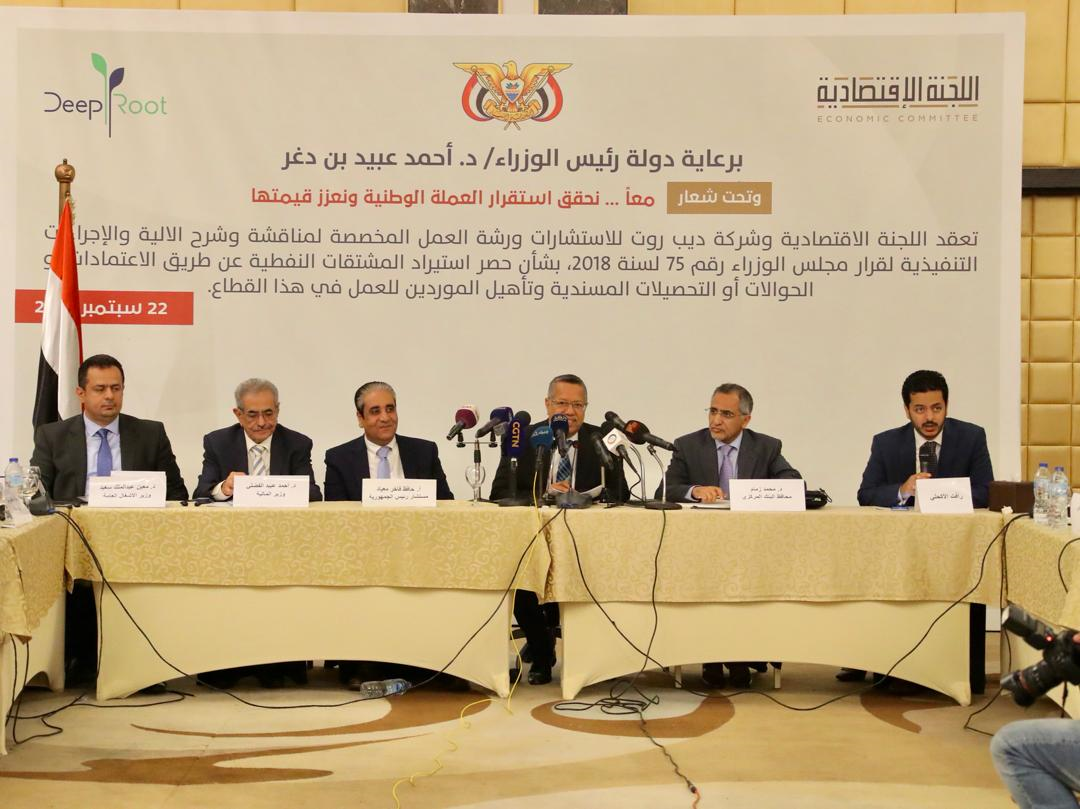
Prime Minister Ahmed bin-Daghr said the Houthi rebels collected revenues worth 846 billion Yemeni Riyals last year and pumped it into the market to buy US dollars.
In a seminar held by the national Economic Committee under the slogan "Together We (should) Stabilize the Riyal" in the Egyptian capital on Saturday, bin-Daghr cited a number of Houthi financial abuses that led to the depreciation of the Riyal against the US dollar.
He said the Sana'a-based rebels "collected the revenues from taxes, customs, and other levies that Houthis made religiously (compulsory) such as the Khomos (fifth of individuals' income )."
"Not taking these funds directly to the central bank and commercial banks …is another cause of the collapse of the national currency," he said referring to Houthi practices.
"The leaders of the coupist militia injected nearly 200 billion Riyals all at once to the local market to get it replaced with newly printed banknotes and with foreign currencies," he added.
Going chronically backwards in the militia's abuses, he said: " After looting the country's reservoir of hard currency, and two trillion Yemeni Riyals and hoarded them all in their stores (starting from 2014), the militia's leaders injected the Riyals again into the market giving the national currency a deep stab."
Key words:
individuals' - depreciation - religiously - chronically - SABA Prime - "collected - compulsory - currencies - commercial - Committee -
Yemeni Rights Network Documents 42 Houthi Violations in Taiz in 48 Hours
Berlin Protest Calls for Lifting Taiz Siege, Designating Houthis as Terrorists
Coalition Carries Out Operation to Neutralize Houthi Threats
Yemen’s Human Rights Ministry Warns of Humanitarian Catastrophe in Taiz
Citizen Killed by Houthi Landmine Explosion in Al-Baydha Governorate
Yemen Condemns Israeli National Security Minister’s Incursion into Al-Aqsa Mosque
Prime Minister Discusses Houthi Escalation, Attacks on Civilians, Taiz Siege with EU Mission's Ambassador
Al-Barkani Informs Chairman of Pakistan's National Assembly on Developments in Yemen
Yemen Participates in 17th Session of Arab Ministerial Water Council
Houthi Shelling Kills Child in Southern Taiz