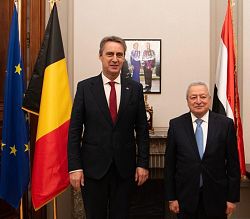
Yemen’s Ambassador Discusses Cooperation with Belgian Senate President
Yemen’s Ambassador to Belgium Mohammed Taha Mustafa discussed Tuesday with Belgian Senate President Vincent Blondel bilateral cooperation and ways to strengthen relations.
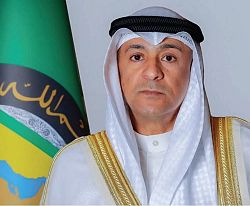
GCC Secretary-General Welcomes UN Security Council’s Position on Houthi Attacks Against Saudi Arabia
The Secretary-General of the Gulf Cooperation Council (GCC) Jasem Albudaiwi has expressed his appreciation for the position conveyed by members of the United Nations Security Council in their presidential statement regarding the attacks carried out by the Houthi terrorist militia against the Kingdom of Saudi Arabia.

Brent Crude Futures Rise 12 Cents
Oil prices remained mostly unchanged in early Asian trading on Thursday following gains from the previous session and a sharp monthly increase.

Al Nassr Beat Al Fateh 3-0 in Saudi Football League
Al Nassr defeated Al Fateh 3-0 in the opening round of the Saudi Pro League, known as the Roshn Saudi League.
Last Update: ،
2026/10/21
Time
08:06:20
Latest News:
 Shura Council Chairman Discusses Ways to Strengthen Bilateral Relations with Kuwaiti Ambassador
Taiz Local Authority Condemns Houthi Shelling of Residential Areas and Attack on Ambulance
Houthi Missile Attack Kills Girl, Wounds Eight in Taiz
Coalition Intercepts and Destroys Ballistic Missile Launched Toward Riyadh
Al-Arada Condoles Shabwa Governor, Vows Houthi Crimes Will Not Weaken Yemenis’ Resolve
Latest News:
Shura Council Chairman Discusses Ways to Strengthen Bilateral Relations with Kuwaiti Ambassador
Taiz Local Authority Condemns Houthi Shelling of Residential Areas and Attack on Ambulance
Houthi Missile Attack Kills Girl, Wounds Eight in Taiz
Coalition Intercepts and Destroys Ballistic Missile Launched Toward Riyadh
Al-Arada Condoles Shabwa Governor, Vows Houthi Crimes Will Not Weaken Yemenis’ Resolve
Houthis caused water crisis, spread of epidemics, say YCMHRV members
[19/09/2018 02:00]
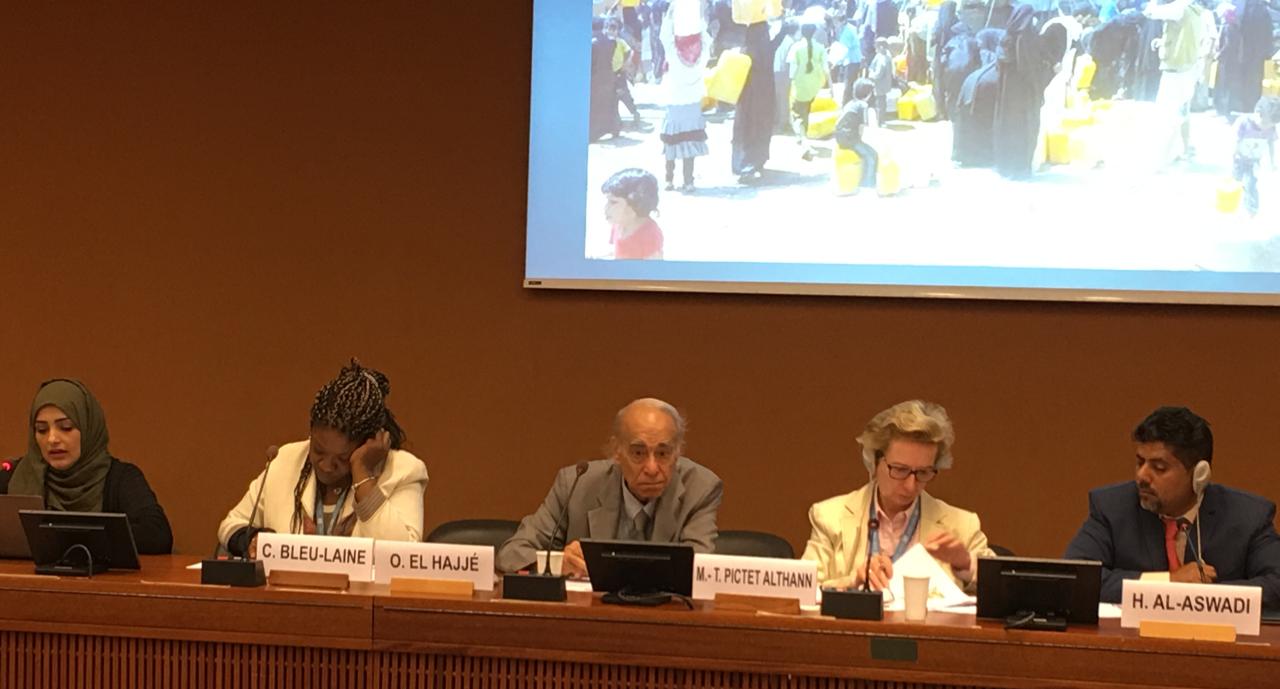
GENEVA-SABA
The Yemeni Coalition for Monitoring Human Rights Violations (YCMHRV) said the war launched by the Houthi militia following their coup in September 2014 caused a major water crisis and the spread of diseases and epidemics such as malaria and dengue fever.
In a speech on the sidelines of the 39th session of the Human Rights Council in Geneva, YCMHRV member Hani Al-Asoudi said the militia destroyed the offices of the Local Corporation for Water and Sanitation in a number of provinces and the artesian water wells and cisterns in Hodeidah, Taiz, Hajjah, Aden and otherprovincesas part of a collective punishmentof against civilians.
Another YCMHRV member, Ms. Huda al-Sorari, said many areas of Yemen suffer have always suffered a chronic severe shortage of drinking water and agricultural irrigation water. This shortage became worse after the Houthigroup abandoned Yemen's historical National Dialogue and seized power militarily and unleashed the war that is continuing to now.
In Taiz,the chronic water crisis has increased in severity since the Houthis imposed siege around the city in March 2015.
"Piped water used to reach the houses once every 40 days, the crisis became even worse as theHouthiwar brought the governmental utilityin charge of water supplyto a halt," she said.
"The water crisis compelled children to toil in fetching water to their houses and get killed by Houthi snipers as they run thoseessential errands."
As another impact of the water shortage she cited the WHO's statistics which indicate that 14,000 under-five Yemeni children die every year as a result of diseases caused by the shortage of water.
Another Houthi direct involvement in maintaining the water crisis is their militarization of water sources by turning those water utilities or wells to sites for their fighters and military hardware.
Key words:
otherprovincesas - militarization - thoseessential - agricultural - governmental - theHouthiwar - punishmentof - Another - Houthigroup - maintaining -
Human Rights Minister Discusses Houthi Violations with German Foreign Ministry Official
President al-Alimi Calls for International Efforts to Designate Houthi Militia as Terrorist Organization
Yemeni Ambassador Discusses Escalating Houthi Threats with US Assistant Secretary of State
Zouba, Indonesian Deputy Foreign Minister Discuss Cultural and Educational Cooperation
Al-Khanbashi Praises UNDP Interventions in Hadramout
Iraqi Prime Minister Receives Foreign Minister
Yemen Welcomes European Council's Statement on Houthi Terrorist Militias' Escalation
Foreign Minister: Tehran Regime Party to War on Yemenis, Not Mediator
Foreign Minister Holds Talks with Indonesian Counterpart on Yemen, Regional Developments
President al-Alimi Discusses National and Regional Developments with UK Foreign Secretary