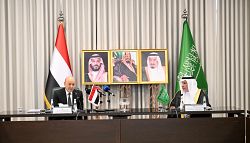
President al-Alimi Launches Package of Relief Projects from King Salman Center to Support Taiz's Resilience, Help those Affected Across Yemen
His Excellency President Dr. Rashad al-Alimi, Chairman of the Presidential Leadership Council (PLC), visited today, Tuesday the King Salman Center for Relief and Humanitarian Work. He was received by Dr. Abdullah al-Rabeeah, Advisor at the Royal Court and General Supervisor of the Center, Saudi Arabia's Ambassador to Yemen, Mohammed al-Jaber, along with several leaders of the center and its partners in relief and humanitarian work.
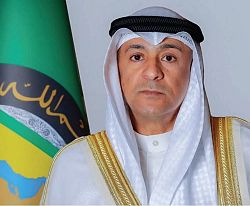
GCC Secretary-General Welcomes UN Security Council’s Position on Houthi Attacks Against Saudi Arabia
The Secretary-General of the Gulf Cooperation Council (GCC) Jasem Albudaiwi has expressed his appreciation for the position conveyed by members of the United Nations Security Council in their presidential statement regarding the attacks carried out by the Houthi terrorist militia against the Kingdom of Saudi Arabia.

Brent Crude Futures Rise 12 Cents
Oil prices remained mostly unchanged in early Asian trading on Thursday following gains from the previous session and a sharp monthly increase.

Al Nassr Beat Al Fateh 3-0 in Saudi Football League
Al Nassr defeated Al Fateh 3-0 in the opening round of the Saudi Pro League, known as the Roshn Saudi League.
Last Update: ،
2026/10/27
Time
11:46:57
Latest News:
 Yemeni Ambassador Discusses Developments in Yemen with Czech Parliament Speaker
Aden Governor Discusses with UNICEF Strengthening Interventions in Water, Education
Green Climate Fund Approves Project Worth $28 Million to Develop 'CWIMEWS' in Yemen
Yemen, China Discuss Development and Humanitarian Cooperation
President al-Alimi Calls on Europe to Designate Houthis as Terrorist Organization
Latest News:
Yemeni Ambassador Discusses Developments in Yemen with Czech Parliament Speaker
Aden Governor Discusses with UNICEF Strengthening Interventions in Water, Education
Green Climate Fund Approves Project Worth $28 Million to Develop 'CWIMEWS' in Yemen
Yemen, China Discuss Development and Humanitarian Cooperation
President al-Alimi Calls on Europe to Designate Houthis as Terrorist Organization
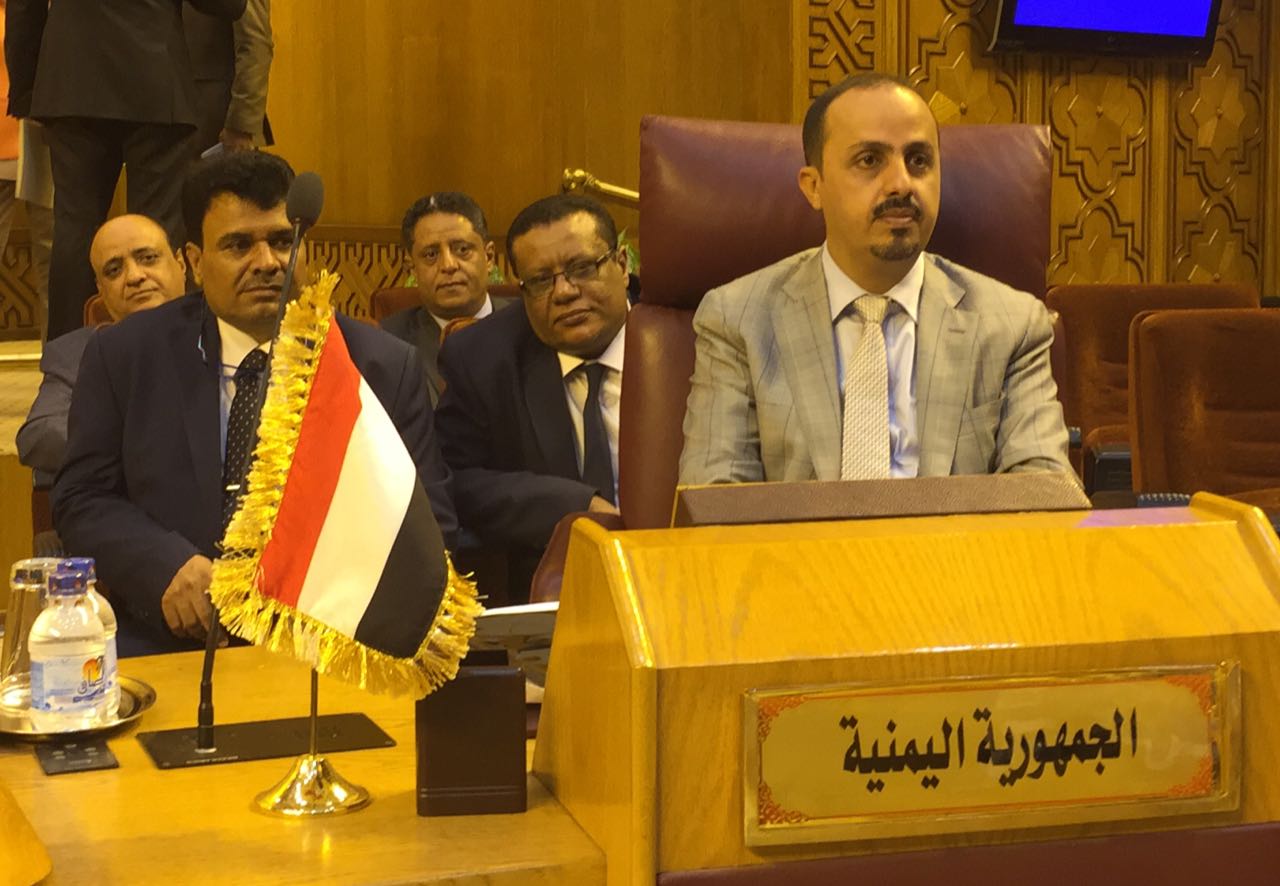
Info. minister calls on Arab media to unify counter-terrorism discourse
[12/07/2017 03:05]
CAIRO-SABA
Yemen's information minister Muammar al-Eryani has called on the Arab media outlets to unify their counter-terrorism discourse.
Addressing the 48th session of Arab Information Ministers held in Cairo today, al-Eryani made clear that terrorism is "targeting us more than others." "For we pay all its dire costs economically, politically, socially and security wise," said the minister.
The minister recalled the all-inclusive transitional national dialogue (March 2013 to Jan. 2014) "in which Yemenis agreed on a democratic governance in the form of a six-region federal state, before the Saleh-Houthi militias conducted a military coup against the people's will and starting capturing provinces."
The minister affirmed the importance of coping with and making use of the huge technological advances of media operation to portray the real image of the Arab people and their values and morals apart from the decades-old stereotypes in this regard.
The minister pointed that Yemen is struggling for the third straight year to end the coup and recover their state back from the coup militias' capture. But with the Saudi-led Arab coalition's help Yemen's government has recovered 80% of the countries territories.
Yemen's information minister Muammar al-Eryani has called on the Arab media outlets to unify their counter-terrorism discourse.
Addressing the 48th session of Arab Information Ministers held in Cairo today, al-Eryani made clear that terrorism is "targeting us more than others." "For we pay all its dire costs economically, politically, socially and security wise," said the minister.
The minister recalled the all-inclusive transitional national dialogue (March 2013 to Jan. 2014) "in which Yemenis agreed on a democratic governance in the form of a six-region federal state, before the Saleh-Houthi militias conducted a military coup against the people's will and starting capturing provinces."
The minister affirmed the importance of coping with and making use of the huge technological advances of media operation to portray the real image of the Arab people and their values and morals apart from the decades-old stereotypes in this regard.
The minister pointed that Yemen is struggling for the third straight year to end the coup and recover their state back from the coup militias' capture. But with the Saudi-led Arab coalition's help Yemen's government has recovered 80% of the countries territories.
Key words:
SABA Yemen's - technological - transitional - economically - coalition's - politically - Information - stereotypes - territories - information -
Green Climate Fund Approves Project Worth $28 Million to Develop 'CWIMEWS' in Yemen
Yemen, China Discuss Development and Humanitarian Cooperation
Report Documents Houthi Violations Against 107 Women and Children in Taiz
Coalition Intercepts and Destroys Four Drones and Three Ballistic Missiles Launched by Houthis Toward Saudi Arabia
Berlin Protest Calls for Lifting Taiz Siege, Designating Houthis as Terrorists
Yemen’s Human Rights Ministry Warns of Humanitarian Catastrophe in Taiz
Al-Barkani Informs Chairman of Pakistan's National Assembly on Developments in Yemen
Yemen Participates in 17th Session of Arab Ministerial Water Council
Houthi Shelling Kills Child in Southern Taiz
Aden Governor Discusses Humanitarian Cooperation and Sustainable Development Projects with UN OCHA