
Yemen Calls for Firm International Action Against Houthis
Foreign Minister Dr. Afrah al-Zouba has called for a firm international stance against the Houthi terrorist militias and concrete measures to implement relevant UN Security Council resolutions, particularly Resolution 2216.
Second Day of International Media Forum on Islamic Civilization Kicks Off in Tashkent
The second day of the International Media Forum “Islamic Civilization: A New Perspective – New Discoveries” commenced today, Wednesday, at the Center for Islamic Civilization in the Uzbek capital, Tashkent.

Brent Crude Futures Rise 12 Cents
Oil prices remained mostly unchanged in early Asian trading on Thursday following gains from the previous session and a sharp monthly increase.

Al Nassr Beat Al Fateh 3-0 in Saudi Football League
Al Nassr defeated Al Fateh 3-0 in the opening round of the Saudi Pro League, known as the Roshn Saudi League.
Last Update: ،
2026/10/11
Time
11:29:05
Latest News:
 Coalition Says Cruise Missile Intercepted Near King Khalid International Airport
Yemen Religious Scholars Condemn Houthi Attack on King Khalid International Airport in Riyadh
Rights Group: Houthi Siege of Taiz Worsens Suffering of 2.5 Million People
Council of Ministers Praises Armed Forces Heroic Fighting for Restoring State Institutions
Governor Issues Urgent National, Humanitarian Appeal to Lift Siege on Taiz
Latest News:
Coalition Says Cruise Missile Intercepted Near King Khalid International Airport
Yemen Religious Scholars Condemn Houthi Attack on King Khalid International Airport in Riyadh
Rights Group: Houthi Siege of Taiz Worsens Suffering of 2.5 Million People
Council of Ministers Praises Armed Forces Heroic Fighting for Restoring State Institutions
Governor Issues Urgent National, Humanitarian Appeal to Lift Siege on Taiz
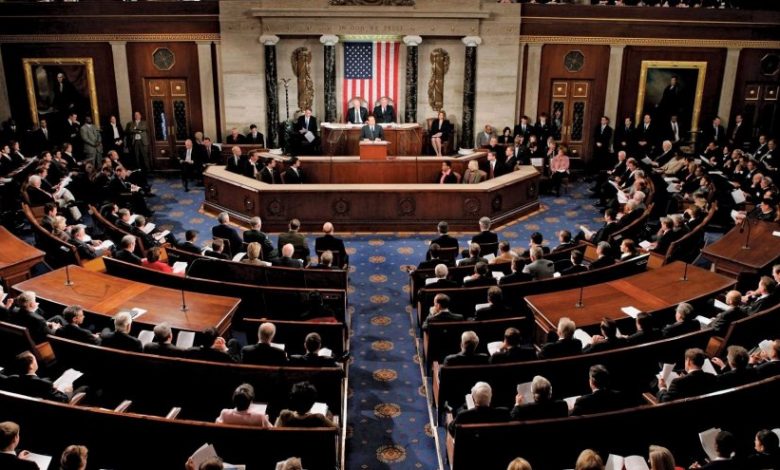
U.S. House Holds Hearing on Countering Houthi Terrorism and Protecting Red Sea Security
[01/09/2026 05:11]
WASHINGTON-SABA
The U.S. House of Representatives held a hearing on Tuesday titled “Countering Houthi Terrorism: Protecting American Interests and Red Sea Security,” focusing on the growing threat posed by the Iran-backed Houthi militia to international shipping, regional stability and U.S. interests.
Subcommittee Chairman Rep. Mike Lawler said the Houthis were a foreign terrorist organisation armed with ballistic and cruise missiles and attack drones, noting that the group had targeted U.S. forces, attacked American partners and threatened commercial shipping in one of the world's most important waterways.
Lawler said Iran had played a central role in developing the Houthis' military capabilities by providing weapons, funding, training and technical expertise, transforming a local armed movement into a terrorist organisation capable of threatening Americans and disrupting international trade.
He stressed that military deterrence alone would not be sufficient, arguing that efforts must also target the financial, procurement, smuggling and logistical networks enabling the Houthis to replenish destroyed military capabilities.
Rep. Jared Moskowitz highlighted continued Houthi attacks against commercial shipping and Saudi Arabia, warning that the group's activities had increased risks to maritime navigation and global energy flows while threatening to draw Yemen deeper into wider regional conflict.
He also called for stronger international efforts to curb the smuggling of dual-use materials and technology used to enhance Houthi missile and drone capabilities.
Yemeni-American researcher Nadwa al-Dawsari told the hearing that the continued development of the Houthi threat was driven by sustained Iranian support and the international community's underestimation of the group.
She stressed the need for a long-term strategy that strengthens the Yemeni government, noting that Houthi territorial control provides the group with recruits, revenues, ports, smuggling routes and areas for manufacturing and storing weapons.
Meanwhile, Allison Miner, Director of the Middle East Integration Project at the Atlantic Council, warned that an open-ended war could ultimately benefit the Houthis. She called for resuming humanitarian assistance, strengthening Yemeni government institutions and supporting the Yemeni Coast Guard.
She said a sustainable U.S. strategy should rely on continued cooperation with Yemeni and regional partners rather than oscillating between costly military intervention and disengagement.
Key words:
Subcommittee - Representatives - underestimation - disengagement - international - strengthening - Meanwhile - manufacturing - “Countering - intervention -
Yemen Calls for Firm International Action Against Houthis
Coalition Says Cruise Missile Intercepted Near King Khalid International Airport
Yemen Religious Scholars Condemn Houthi Attack on King Khalid International Airport in Riyadh
Rights Group: Houthi Siege of Taiz Worsens Suffering of 2.5 Million People
Council of Ministers Praises Armed Forces Heroic Fighting for Restoring State Institutions
Government: "Yemen Dawn Operation" New Phase in Struggle for Restoring State Institutions, Eliminating Houthi Coup
Report: Houthi Militias Blamed for Demolishing 1,774 Homes, Civilian Buildings
Amb. al-Eryani Updates German Lawmaker on Developments in Yemen
Yemen's Ambassador Confers with Malaysian Official over Joint Cooperation
Human Rights Ministry Welcomes Adoption of Technical Assistance Resolution for Yemen