Ministry of Social Affairs Issues Urgent Humanitarian Appeal over Deteriorating Conditions in Taiz
The Ministry of Social Affairs and Labor issued Tuesday an urgent humanitarian appeal to international and regional organizations and agencies, associations, institutions, unions, local and foreign civil society organizations and its private-sector partners, calling for an immediate action and intensified efforts to alleviate the suffering of citizens and respond to the growing humanitarian needs in Taiz Governorate.
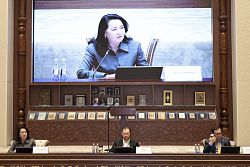
Second Day of International Media Forum on Islamic Civilization Kicks Off in Tashkent
The second day of the International Media Forum “Islamic Civilization: A New Perspective – New Discoveries” commenced today, Wednesday, at the Center for Islamic Civilization in the Uzbek capital, Tashkent.

Brent Crude Futures Rise 12 Cents
Oil prices remained mostly unchanged in early Asian trading on Thursday following gains from the previous session and a sharp monthly increase.

Al Nassr Beat Al Fateh 3-0 in Saudi Football League
Al Nassr defeated Al Fateh 3-0 in the opening round of the Saudi Pro League, known as the Roshn Saudi League.
Last Update: ،
2026/10/13
Time
09:46:27
Latest News:
 President al-Alimi: Ending Houthi Terrorism, Irrevocable Decision
Yemen’s Ambassador Discusses Latest Developments with Austrian Parliament President
Presidential Leadership Council Warns Against Collaboration with Houthis, Orders Legal Action
High Committee Approves Methodology for Updating and Developing National Disability Strategy for 2027–2032
Ministry of Agriculture Signs MoU with WFP to Boost Food Security in Yemen
Latest News:
President al-Alimi: Ending Houthi Terrorism, Irrevocable Decision
Yemen’s Ambassador Discusses Latest Developments with Austrian Parliament President
Presidential Leadership Council Warns Against Collaboration with Houthis, Orders Legal Action
High Committee Approves Methodology for Updating and Developing National Disability Strategy for 2027–2032
Ministry of Agriculture Signs MoU with WFP to Boost Food Security in Yemen
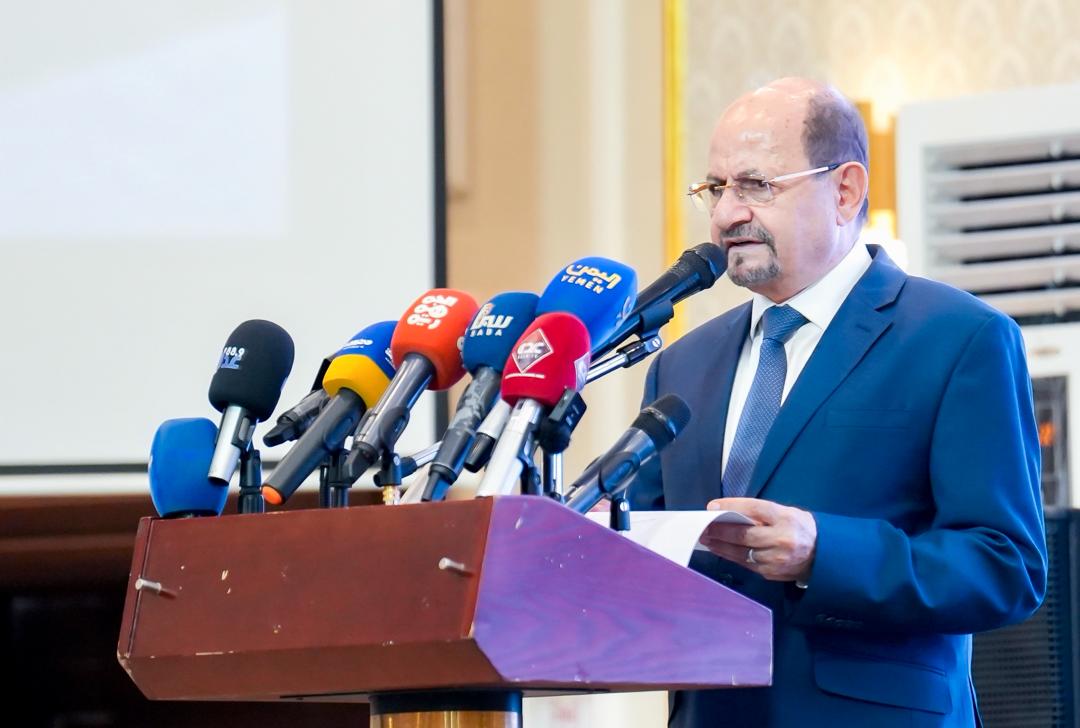
Prime Minister Opensin Aden National Conference on Partnership, Integration Between Government and Local Authorities
[14/06/2026 05:40]
ADEN – SABA
The Prime Minister and Minister of Foreign Affairs and Expatriates Dr. Shaya Zindani inaugurated Sunday in the temporary capital Aden, the proceedings of the National Conference on Partnership and Integration Between the Government and Local Authorities.
The three-day conference is being held under the theme: “Towards Decentralized Governance and Sustainable Institutional Empowerment.”
In his opening speech, the Prime Minister and Foreign Minister affirmed that the conference does not aim to draw boundaries between the central authority and local administrations, but rather to establish a more effective and integrated relationship that places serving citizens at the forefront of priorities.
He explained that the current battle, following years of war ignited by the terrorist Houthi militia, is not limited to completing the restoration of state institutions, but also extends to building a more efficient and effective state.
He noted that some of the challenges are not related solely to a lack of resources, but rather to how they are managed, and are not due to insufficient capabilities, but to how powers and responsibilities are distributed and how available tools are utilized in the best possible manner.
“We inherited a highly centralized administrative model that made many simple decisions hostage to complex procedures. At the same time, some governorates moved toward exploiting exceptional circumstances to bypass the state’s laws and financial and administrative regulations,” he said.
Dr. Zindani stressed that granting flexibility to local authorities aims to facilitate citizens’ lives and accelerate development, but it does not in any way mean creating independent islands or entities outside the framework of the state.
He pointed out that the mechanism governing the work of authorities at all levels exists to serve people and overcome obstacles, not to legitimize violations or circumvent the authority of the law.
The Prime Minister and Foreign Minister emphasized that the strength of any local authority is measured by its commitment to law, transparency, and institutional governance as pillars of good governance and combating corruption.
He reaffirmed the government’s commitment to moving from “managing details” to “managing public policies,” and stated that strict measures will be taken against those who violate systems and laws, whether at the central or local level.
Regarding financial matters, Dr. Zindani reiterated that collecting resources is not merely a matter of “revenue collection,” but rather a social contract aimed at directing public funds toward development. He pledged to regulate revenue sources and ensure that they are directed toward tangible projects that directly affect citizens’ daily lives in sectors such as electricity, water, health, and education. He noted that citizens no longer accept the exchange of excuses or the loss of their rights amid overlapping jurisdictions.
He also conveyed a message to international organizations and partners, affirming that supporting local authorities is a direct investment in stability, recovery, and state-building, and that the success of any local project directly contributes to strengthening the resilience of the state.
The Prime Minister and Foreign Minister concluded his speech by calling on conference participants to demonstrate courage and realism in presenting ideas and practical solutions to existing imbalances within the framework of the constitution.
He pledged that the government would be the true supporter of every local authority that proves its competence and integrity in serving society.


Key words:
responsibilities - administrations - administrative - government’s - jurisdictions - institutional - Decentralized - Institutional - organizations - international -
President al-Alimi: Ending Houthi Terrorism, Irrevocable Decision
Yemen’s Ambassador Discusses Latest Developments with Austrian Parliament President
Presidential Leadership Council Warns Against Collaboration with Houthis, Orders Legal Action
High Committee Approves Methodology for Updating and Developing National Disability Strategy for 2027–2032
Houthis Shell Taiz, Injuring 17 Civilians and Damaging Seven Homes
Yemeni Rights Network Documents 43 Houthi Violations in Taiz in 24 Hours
Coalition Intercepts and Destroys Three Drones North of Riyadh
Yemen, Djibouti Discuss Cooperation on Migration and Refugee Issues
Transport Minister Chairs Meeting on Closing Smuggling Points and Regulating Seaports
Civil Service Ministry Announces Wednesday Holiday to Mark 63rd Anniversary of October 14 Revolution