Ministry of Social Affairs Issues Urgent Humanitarian Appeal over Deteriorating Conditions in Taiz
The Ministry of Social Affairs and Labor issued Tuesday an urgent humanitarian appeal to international and regional organizations and agencies, associations, institutions, unions, local and foreign civil society organizations and its private-sector partners, calling for an immediate action and intensified efforts to alleviate the suffering of citizens and respond to the growing humanitarian needs in Taiz Governorate.
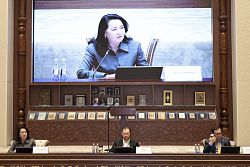
Second Day of International Media Forum on Islamic Civilization Kicks Off in Tashkent
The second day of the International Media Forum “Islamic Civilization: A New Perspective – New Discoveries” commenced today, Wednesday, at the Center for Islamic Civilization in the Uzbek capital, Tashkent.

Brent Crude Futures Rise 12 Cents
Oil prices remained mostly unchanged in early Asian trading on Thursday following gains from the previous session and a sharp monthly increase.

Al Nassr Beat Al Fateh 3-0 in Saudi Football League
Al Nassr defeated Al Fateh 3-0 in the opening round of the Saudi Pro League, known as the Roshn Saudi League.
Last Update: ،
2026/10/14
Time
10:16:08
Latest News:
 President al-Alimi: Ending Houthi Terrorism, Irrevocable Decision
Yemen’s Ambassador Discusses Latest Developments with Austrian Parliament President
Presidential Leadership Council Warns Against Collaboration with Houthis, Orders Legal Action
High Committee Approves Methodology for Updating and Developing National Disability Strategy for 2027–2032
Ministry of Agriculture Signs MoU with WFP to Boost Food Security in Yemen
Latest News:
President al-Alimi: Ending Houthi Terrorism, Irrevocable Decision
Yemen’s Ambassador Discusses Latest Developments with Austrian Parliament President
Presidential Leadership Council Warns Against Collaboration with Houthis, Orders Legal Action
High Committee Approves Methodology for Updating and Developing National Disability Strategy for 2027–2032
Ministry of Agriculture Signs MoU with WFP to Boost Food Security in Yemen
Meeting in Marib Discusses Enhancing the Impact of Humanitarian Interventions in the Agricultural Sector and Improving Livelihoods
[20/01/2026 06:01]
MARIB – SABA
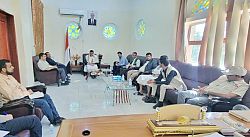
A meeting held Tuesday in Marib Governorate, chaired by the Deputy Governor Dr. Abd-Rabu Miftah, discussed a number of issues related to enhancing the impact of interventions to meet needs, advance the agricultural sector, strengthen its role in food security, and provide direct and indirect job opportunities for the host community and displaced persons.
The meeting, which included representatives of the United Nations Office for the Coordination of Humanitarian Affairs (OCHA) in the governorate, the office of the King Salman Humanitarian Aid and Relief Centre, and international and local organizations implementing projects to support the agricultural sector and improve livelihoods, reviewed humanitarian interventions and ongoing projects in agriculture and livelihoods.
The meeting was attended by the Director of the Planning and International Cooperation Office, Engineer Saleh al-Saqqaf, the Acting Director of the Agriculture Office, the Assistant Director of the Executive Unit for the Management of IDP Camps, and representatives of the local authority in Marib City and al-Wadi districts.
The discussions covered the level of implementation of these projects, their direct and indirect impact on farmers and displaced persons and mechanisms to enhance coordination among all official bodies and partners in implementation and evaluation.
The meeting also addressed the most prominent current and anticipated needs in the agricultural sector, the integration of cooperation to market them and mobilize funding to meet those needs, in a way that contributes to improving implementation quality and achieving the highest possible impact of interventions and projects.
This would be reflected in increased agricultural production and improved livelihoods for farmers and displaced persons.
Deputy Governor Miftah stressed the need to enhance coordination and integration between relevant official bodies and supporting and implementing partners in humanitarian interventions in the agricultural and livelihoods sectors, in order to achieve the desired goals and uphold the principles of transparency and good governance.
He affirmed that the local authority will provide all necessary facilitation to partners to implement their humanitarian interventions and projects, contributing to alleviating the suffering of displaced persons and the host community, and strengthening the role of the promising agricultural sector in the governorate, which is considered one of Yemen’s main agricultural baskets.
He also highlighted its capacity to create wide employment opportunities for displaced persons, as the governorate has absorbed more than 62 percent of them nationwide.
Key words:
representatives - implementation - International - international - opportunities - interventions - organizations - strengthening - agricultural - implementing -
Ministry of Social Affairs Issues Urgent Humanitarian Appeal over Deteriorating Conditions in Taiz
President al-Alimi: Ending Houthi Terrorism, Irrevocable Decision
Yemen’s Ambassador Discusses Latest Developments with Austrian Parliament President
Presidential Leadership Council Warns Against Collaboration with Houthis, Orders Legal Action
High Committee Approves Methodology for Updating and Developing National Disability Strategy for 2027–2032
Ministry of Agriculture Signs MoU with WFP to Boost Food Security in Yemen
Minister of Planning Seeks WB's Support for Economic Stability, Electricity Projects
Houthis Shell Taiz, Injuring 17 Civilians and Damaging Seven Homes
Yemeni Rights Network Documents 43 Houthi Violations in Taiz in 24 Hours
Coalition Intercepts and Destroys Three Drones North of Riyadh