
Ministry of Transport Condemns Houthi Militias for Firing Two Ballistic Missiles on Aden Airport
The Ministry of Transport condemned and strongly decried the targeting of Aden International Airport by the Iranian-backed terrorist Houthi militias this afternoon, Saturday, with two ballistic missiles, marking the fourth time this month, as part of their attacks on vital civilian facilities that serve citizens, travelers and patients.
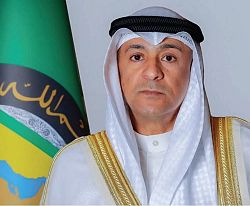
GCC Secretary-General Welcomes UN Security Council’s Position on Houthi Attacks Against Saudi Arabia
The Secretary-General of the Gulf Cooperation Council (GCC) Jasem Albudaiwi has expressed his appreciation for the position conveyed by members of the United Nations Security Council in their presidential statement regarding the attacks carried out by the Houthi terrorist militia against the Kingdom of Saudi Arabia.

Brent Crude Futures Rise 12 Cents
Oil prices remained mostly unchanged in early Asian trading on Thursday following gains from the previous session and a sharp monthly increase.

Al Nassr Beat Al Fateh 3-0 in Saudi Football League
Al Nassr defeated Al Fateh 3-0 in the opening round of the Saudi Pro League, known as the Roshn Saudi League.
Last Update: ،
2026/10/24
Time
06:28:46
Latest News:
 Houthi Militants Kill 64, Hurt 173 Civilians in Taiz Since Last August
Interior Ministry: Houthis Target Coast Guard Facilities in Aden With Three Ballistic Missiles
Yemenis in Brussels Urge EU to Press for End to Taiz Siege
Yemen’s Prime Minister Condemns Terrorist Attack on Church in Jordan
Coalition: Air Defenses Intercept and Destroy Ballistic Missile Launched Toward Riyadh
Latest News:
Houthi Militants Kill 64, Hurt 173 Civilians in Taiz Since Last August
Interior Ministry: Houthis Target Coast Guard Facilities in Aden With Three Ballistic Missiles
Yemenis in Brussels Urge EU to Press for End to Taiz Siege
Yemen’s Prime Minister Condemns Terrorist Attack on Church in Jordan
Coalition: Air Defenses Intercept and Destroy Ballistic Missile Launched Toward Riyadh
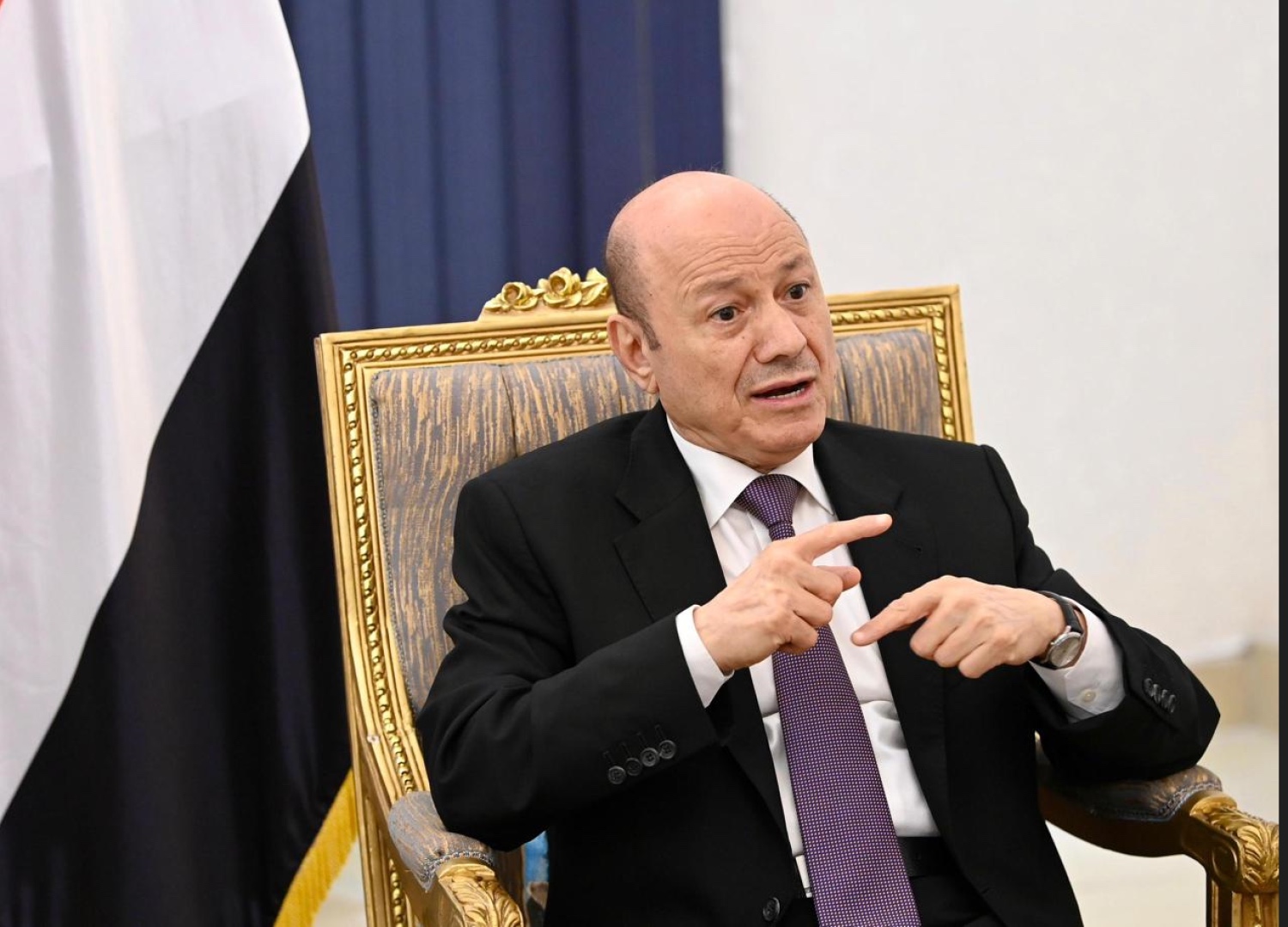
President al-Alimi: Supporting the government, the decisive solution to secure Red Sea
[05/04/2024 12:03]
ADEN - SABA
His Excellency President Dr. Rashad Mohammed al-Alimi, the Chairman of the Presidential Leadership Council, emphasized that the support of the Yemeni government to restore state authority and impose its control over the entire national territory is the only and decisive way to secure the Red Sea and the Bab al-Mandab Strait.
In an interview with Asharq Al-Awsat newspaper, President al-Alimi downplayed the ability of limited US and British airstrikes to end the threat of the Houthi terrorist militias and their attacks on commercial and oil vessels and international shipping lines.
He pointed out that the US and UK strikes on Houthi bases would weaken the Iranian-backed militia, but the ultimate solution would not be airstrikes alone.
He clarified that the threat comes from the land, which is under the control of the militias, and to confront it, it is necessary to restore state authority and impose its control over all regions with the support of the international community.
"This is the only way to secure the Red Sea," he stressed.
He indicated that the West has always exerted pressure on the legitimate government to accept political approaches to a settlement, which helped the Houthis to continue.
"It seems that the West has now changed its view of the crisis and adopted a military approach after the political approach failed," he said.
The Chairman of the Presidential Council also pointed out that the Houthi terrorist militias exploited the war in Gaza to confuse the situation and evade their international and UN commitments under the pretext of "supporting Gaza," while at the same time, these militias besiege the city of Taiz.
He addressed the Houthis, saying: "escaping will not benefit, lift the siege on the Yemeni people first."
The President mentioned that Yemen has been affected by the war in Gaza and that the Houthi attacks on ships have militarized the Red Sea, and broad alliances have been formed to counter these attacks, which have led to a decline in the Yemeni citizens' livelihoods and an increase in prices, coinciding with a six-fold increase in shipping costs.
He emphasized that these attacks do not serve Gaza but rather serve Iran, which seeks to negotiate with the United States regarding sanctions and unleash its hand as a regional player in the area.
He held Iran responsible for the crises in the region, stating that Iran-affiliated militias in Yemen, Syria, and other countries prioritize Iran's interests over everyone else's.
He mentioned that Iran had early plans to control the Red Sea and he had previously warned about it in his speech before the United Nations General Assembly in September 2022.
He considered the establishment of an independent Palestinian state within the framework of a solution based on the Arab Peace Initiative as the only way to end the conflict, away from complicating matters.
In this context, he stated that there are two projects in the region: One is a developmental and renaissance project led by Saudi Arabia, Egypt, and the United Arab Emirates, and the other is a destructive and chaotic project executed by armed militias, noting that one facet of this conflict has resulted in the displacement of about 5 million people inside and outside of Yemen.
President al-Alimi expressed his appreciation for Saudi Arabia's efforts to achieve peace in Yemen, saying: "the Kingdom has accumulated experience and expertise that we rely on, along with its vision for the benefit of Yemen and Yemenis."
He explained that Saudi Arabia has made significant efforts to achieve peace in Yemen over the past two years and even before that, leading to "a roadmap that can serve as a basis for the peace process."
"The Kingdom discussed several points with the group and the government, and after debates and negotiations, they reached an agreement that forms a basis that can be built upon for the peace process," he said.
He reiterated the government's commitment to the path of peace and the efforts made by the Presidential Council over the past two years, stating: "We declared it explicitly after the formation of the Council that it is a council for peace, not for war, and we praised the Saudi efforts because peace is in the interest of Yemen, the region, and the international community."
He expressed his hope that the Saudi roadmap would push towards a comprehensive peace process, based on the Gulf Initiative, the outcomes of the National Dialogue Conference, and the international legitimacy decisions represented by UN Security Council Resolution 2216, which was recently reaffirmed through another resolution condemning the Houthi group's attacks on ships passing through the Red Sea.
He reaffirmed his belief that peace is the solution to the ongoing conflict in the country.
"Peace is in Yemen's interest, but on the condition that the state regains its institutions, monopolizes weapons, and implements the Security Council resolution," he said.
Security Council resolutions provide a roadmap that includes a political, military, and security solution to the Yemeni issue, and if the international community implements them, peace will be achieved, he added.
Regarding the Houthi announcement of minting a metal currency of 100 Yemeni riyals, he affirmed that "this currency is illegitimate and the Central Bank in Aden has taken several measures to address it, with the support of the government.
The Chairman of the Presidential Council expressed his determination to "confront this action by the Houthis," noting that the IMF and the World Bank are in contact with the internationally-recognized government, and there will be meetings to discuss the measures that the international community will take to support the Central Bank in Aden.
Key words:
internationally - Regarding - international - President - developmental - determination - establishment - comprehensive - complicating - displacement -
President al-Alimi: Houthi Militias Attacks On Civilian Airports Require World's Unity, As It Did Against ISIS, Al-Qaeda
President al-Alimi Calls for International Efforts to Designate Houthi Militia as Terrorist Organization
President al-Alimi Discusses National and Regional Developments with UK Foreign Secretary
President al-Alimi asks about Colleagues' Safety Following Houthi Missile Attack on Maashiq Palace
President al-Alimi: Ending Houthi Terrorism, Irrevocable Decision
Presidential Leadership Council Chairman: Yemen Dawn Operation Will Continue Until Its Objectives Are Achieved
President al-Alimi Receives Written Message from Emir of Qatar
President al-Alimi Announces Launch of “Fajr al-Yemen” Operation to Restore State Institutions, Liberate Capital Sana’a
President al-Alimi Declares Military Operations to Restore State Institutions, Take Control Over Entire National Territory
President al-Alimi: Militias Started This War, But Armed Forces Will End It in Way Meets Aspirations of Yemeni People